Wednesday, September 29, 2021

Ward Hobbs studio week: September 27


The children of Ward Hobbs were excited to get back into the studio! And we had a wonderful time playing and discovering together! 

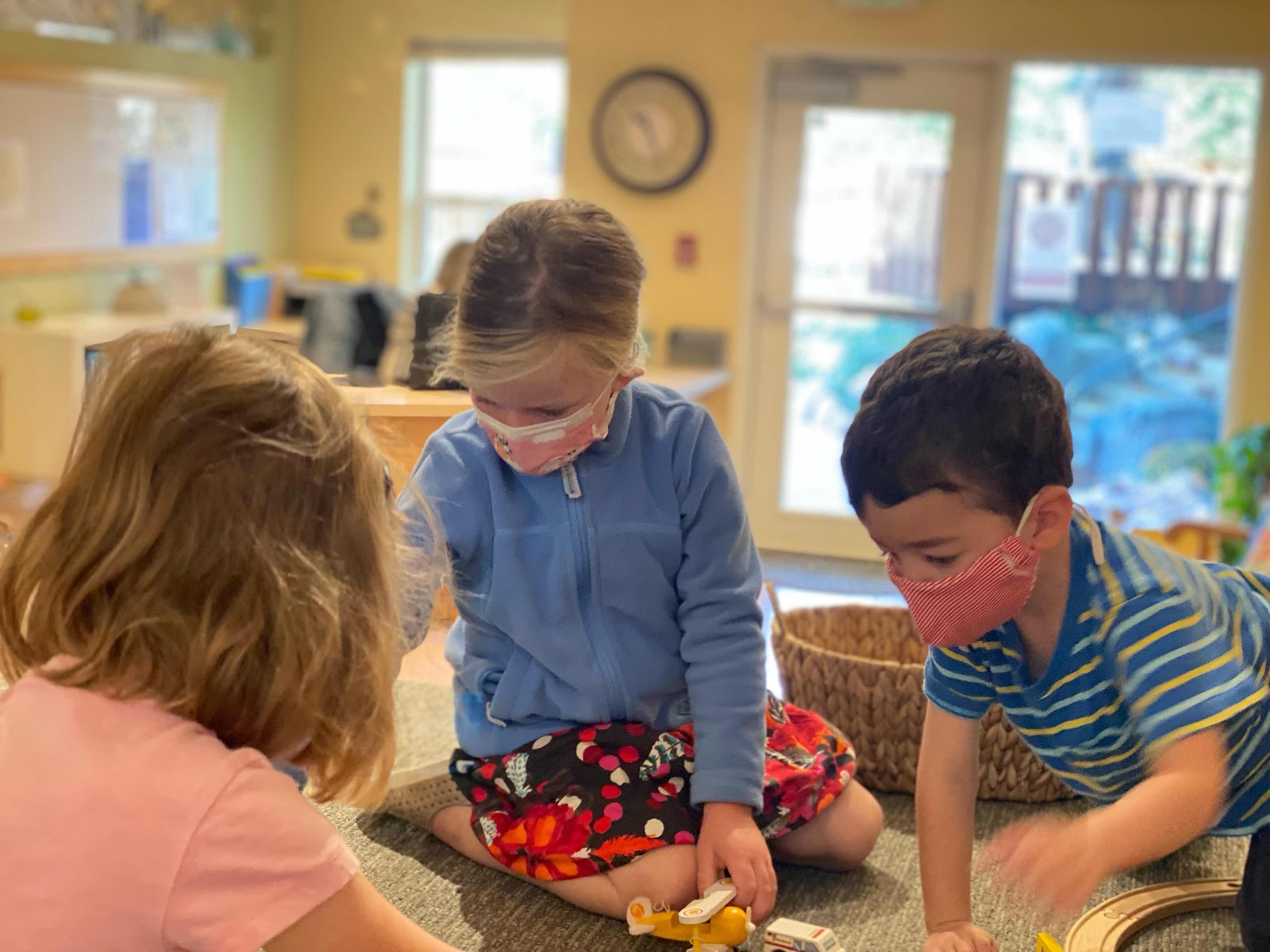
Dramatic play continues to unfold giving children wonderful opportunities to collaborate, manage limited resources, practice conflict resolution and imagine together.

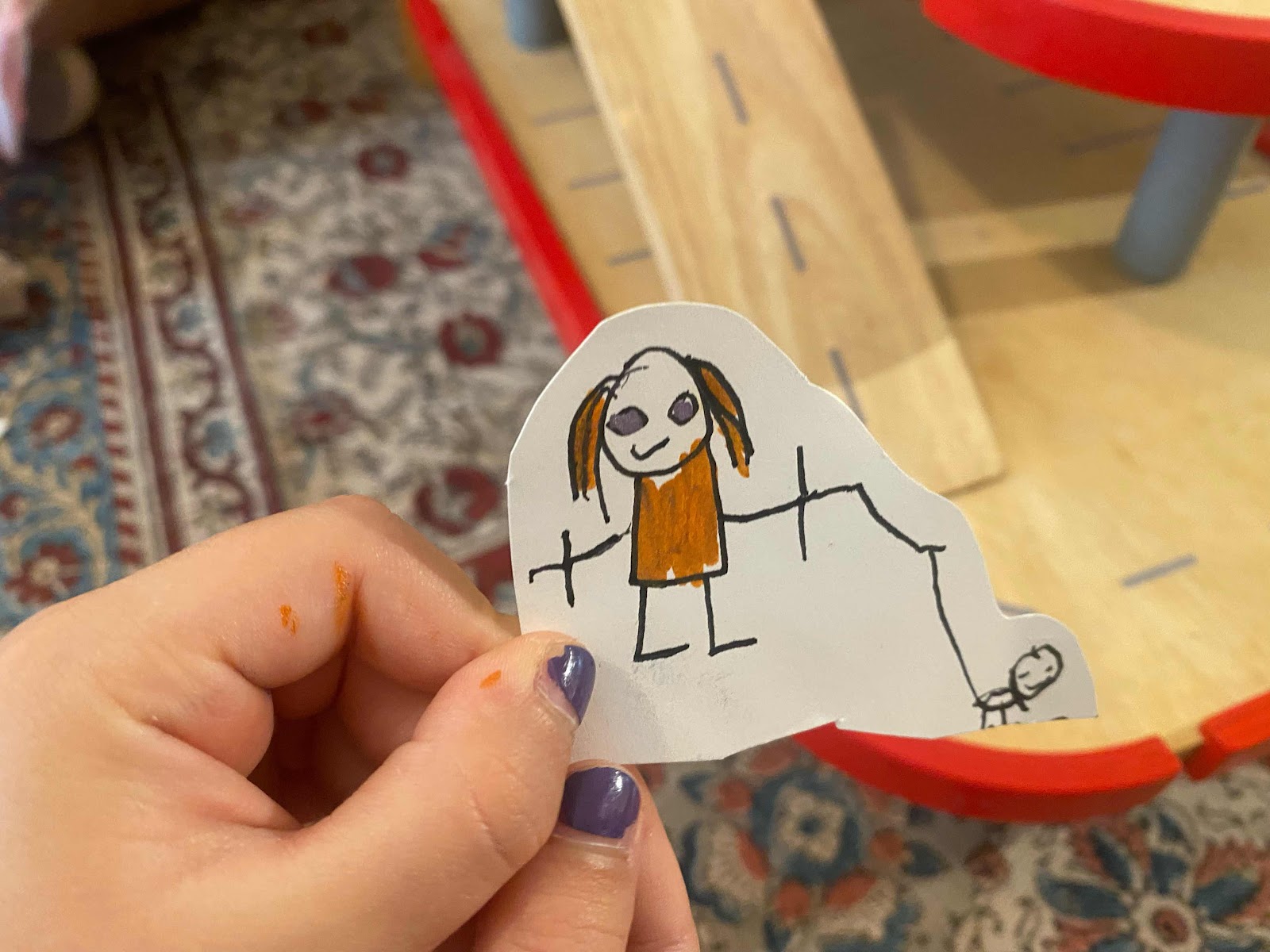
This child noticed that the characters didn't have arms so he drew some and taped them on
The children had lots of opportunities to explore color using oil pastels, liquid water colors and inktense pencils along side black markers.

XP Corner:
The XP children continued their examination of storytelling working to scale last weeks drawings up to a larger size rendered in watercolor.

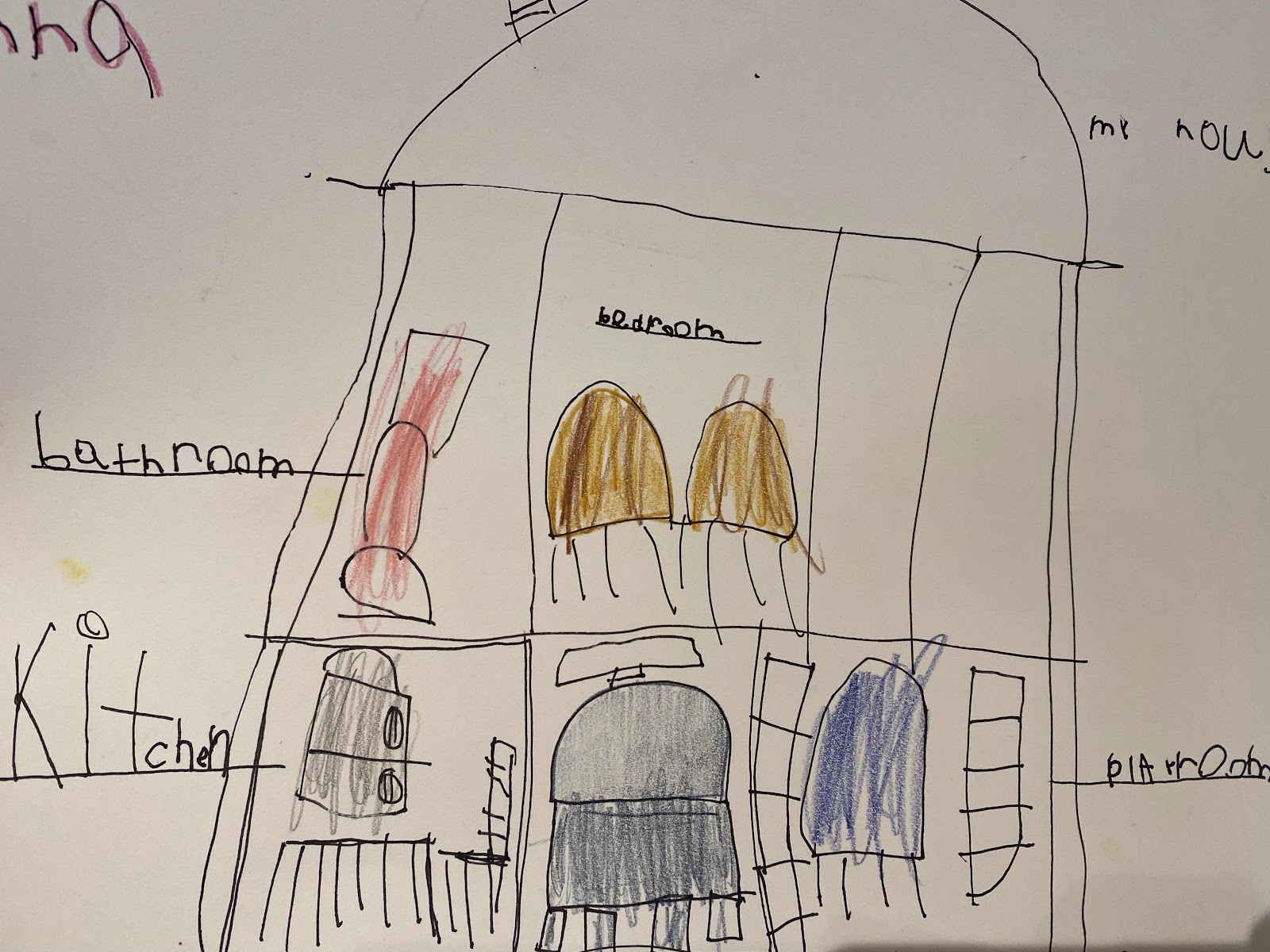
Next, the XP teachers and I helped each child to consider their drawings, particularly the characters and setting.  Then the children decided what dialogue might be added. Utilizing soundboards the children phonetically sounded out their words and labeled their work with appropriate captions.
BJ is back in the studio this week making grape and peach juice fresh from our backyard garden.  Harvesting together is a traditions at Children's Garden and one we all enjoy! 


The consensus was an unanimous, YUM!

We'll see you all back next week!

Friday, September 24, 2021

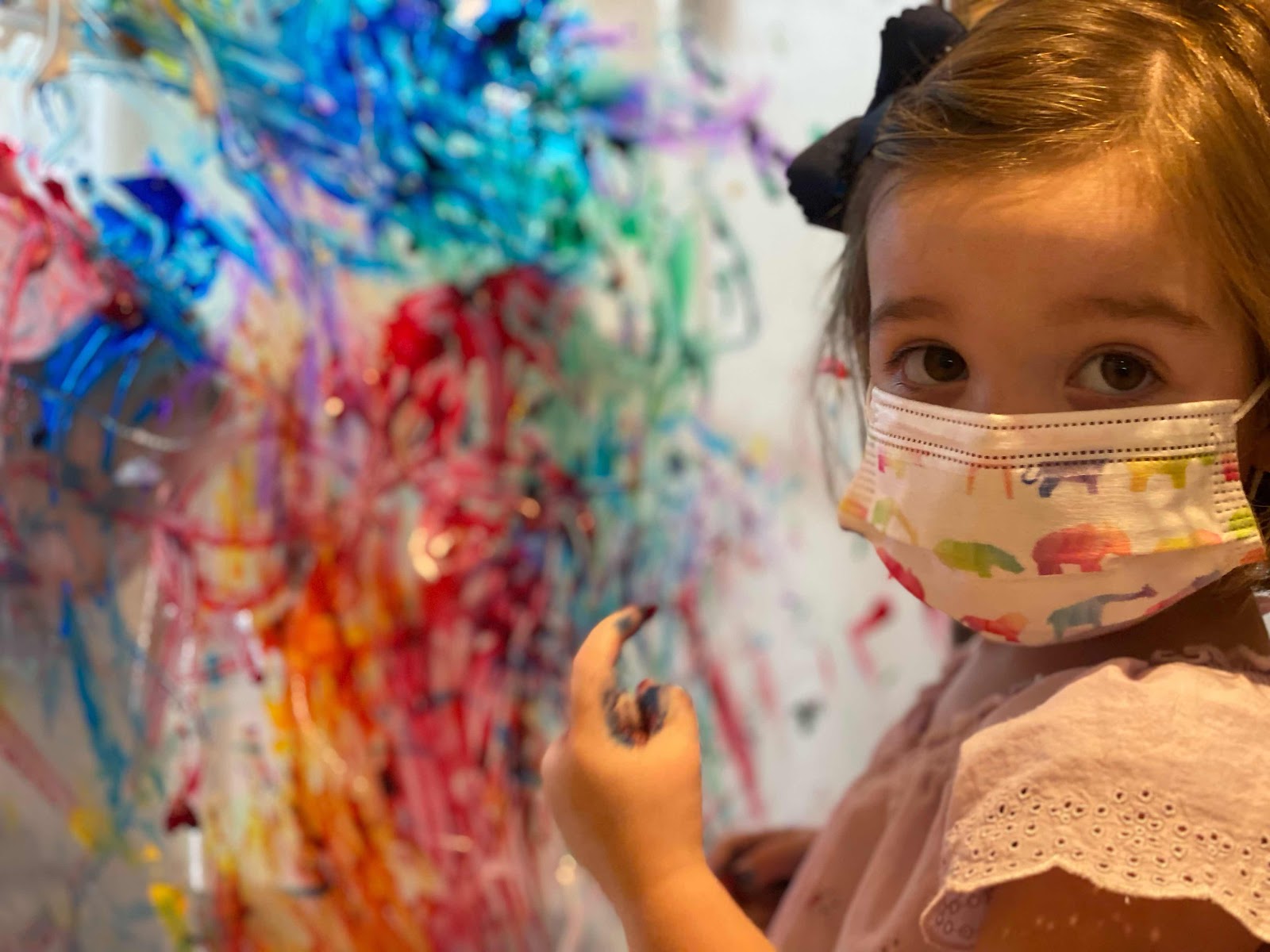
Finger Painting with the Toddlers!

Join us for a fun filled studio day with the Toddlers!!!!


Sensory exploration and mess making are essential aspects of human development. Finding ways to encourage and nurture your child’s sensory curiosity will have surprising benefits in the years ahead! It even encourages nerve connections in the brain associated with motor and language development. So have fun getting messy! Here are a few ideas to get you started: whipped cream with food coloring, pudding paint, shaving cream with food color, finger paint, playing in the mud, baking bread with you, spice painting and so much more!

Friday, September 17, 2021

Emerging Themes in 440

Welcome to our second studio week in 440!  Look what we've been up to!

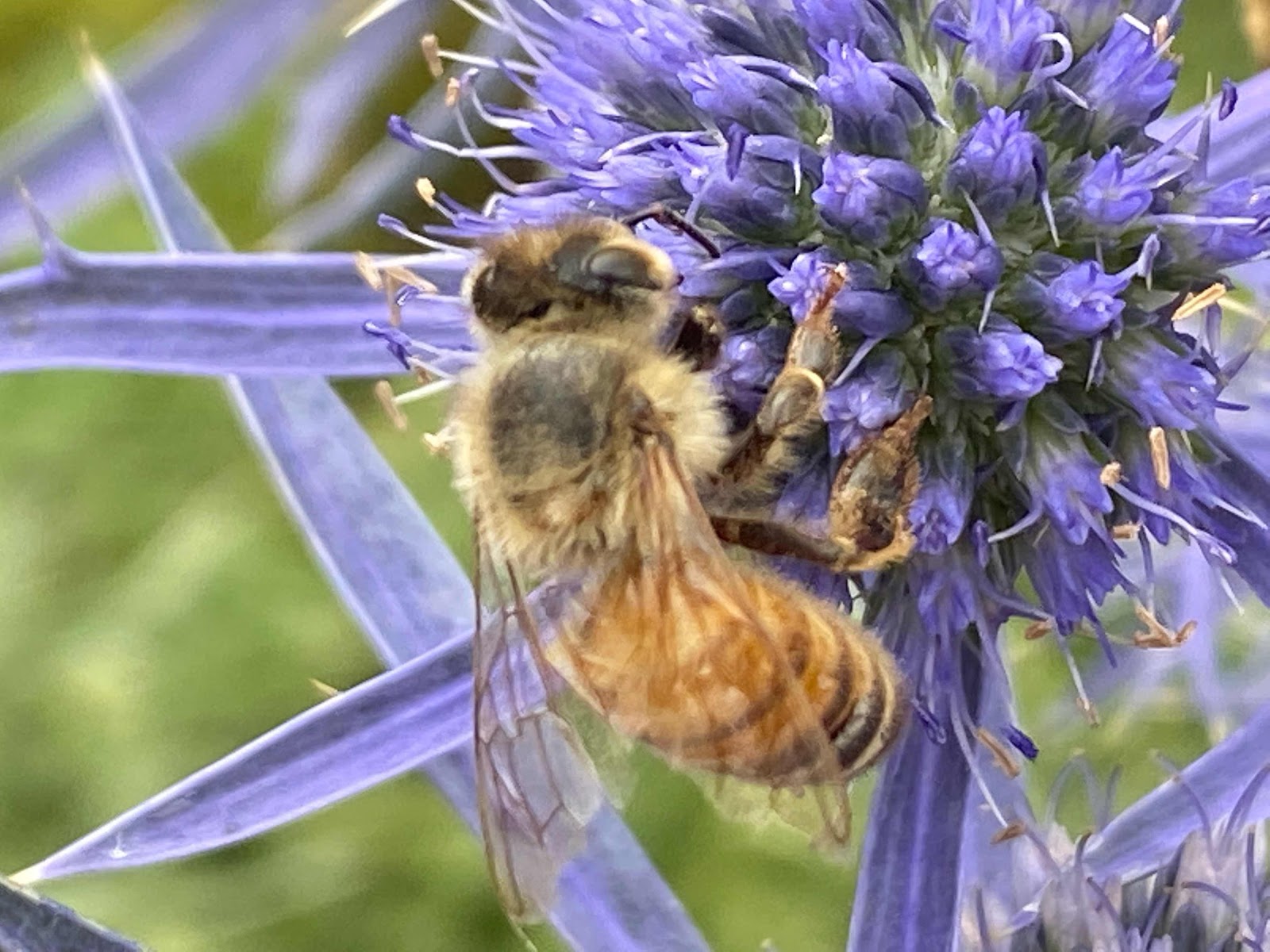
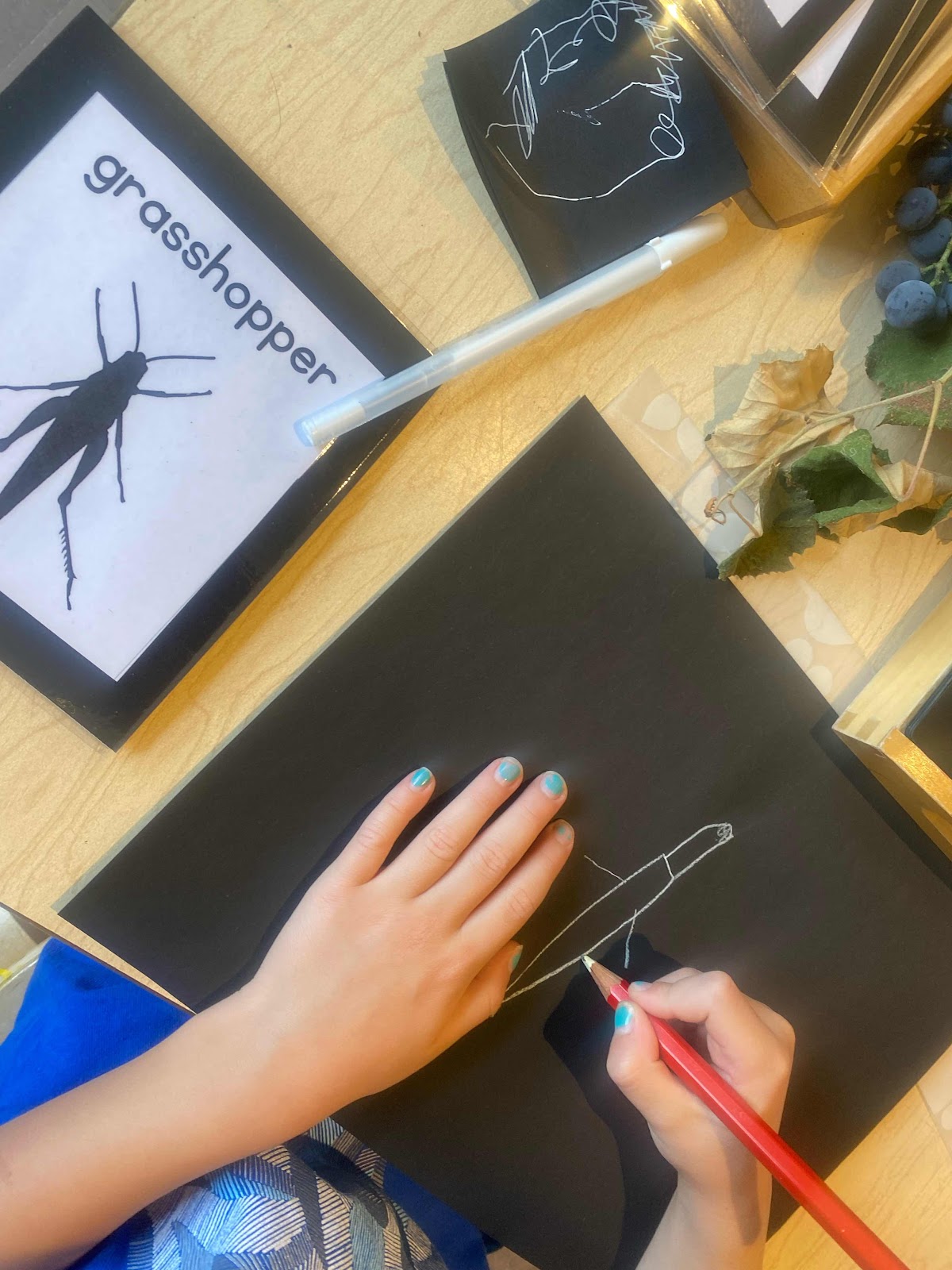
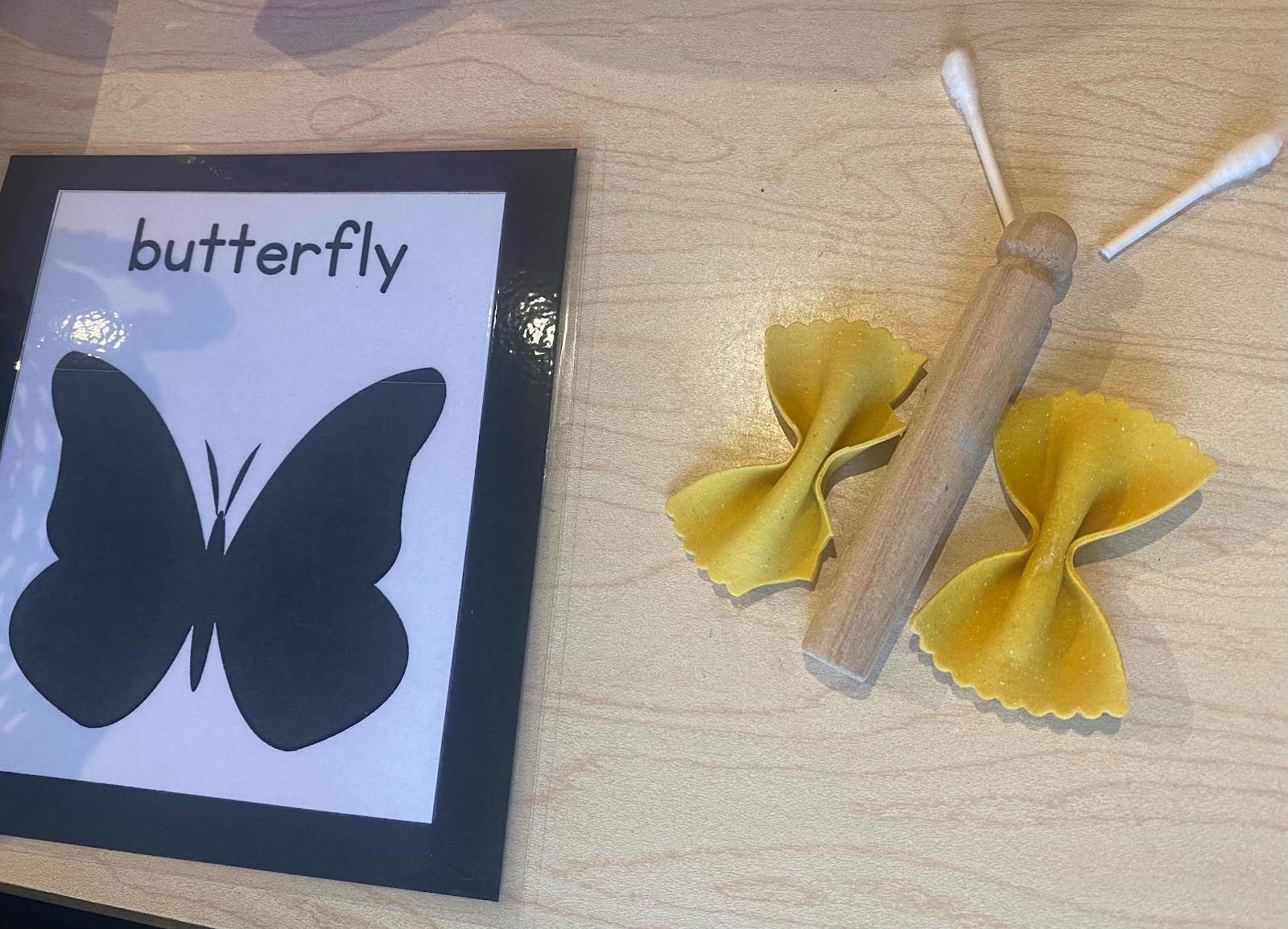
As the season prepares to shift toward the colorful days of autumn we are discovering bugs glorious bugs!!!

And to celebrate, the children have been drawing insects using Prisma pencils on black cardstock...
Creating insects from loose parts...

And recording observations in liquid water color and graphite on mixed media paper.


Observational Drawing:
Harvest season is ramping up and the children are always eager to help prepare natures bounty for a gustatory delight.  This week we focused on apples!
An early emphasis on Observational Drawing helps us to slow down and really look at the subject with curiosity and precision. 

And the drawings communicate the time spent getting to know each subject.

Cooking:
The studio is so glad to welcome BJ back for a year of collaborative cooking!!!
Today we made apple-mixed fruit butter and it was DELICIOUS!!!
Each child is bringing home some butter to share, but if you’d like to make some too the recipe is super easy! We mostly used apples, with a few peaches, strawberries and even a plum added in (all but the strawberries came from trees at school or from home), add sugar to taste, a little water, some lemon juice, a dash of salt, a bit of cloves and a good shake of cinnamon. Cook low and slow for a long while and then purée. Bon appétit!

XP Corner:

Tuesday, September 14, 2021

Drawing, cooking and fun in Ward Hobbs


What a wonderful week in the Ward Hobbs classroom! Absolutely wonderful. Here’s a glimpse :
Observational Drawing:
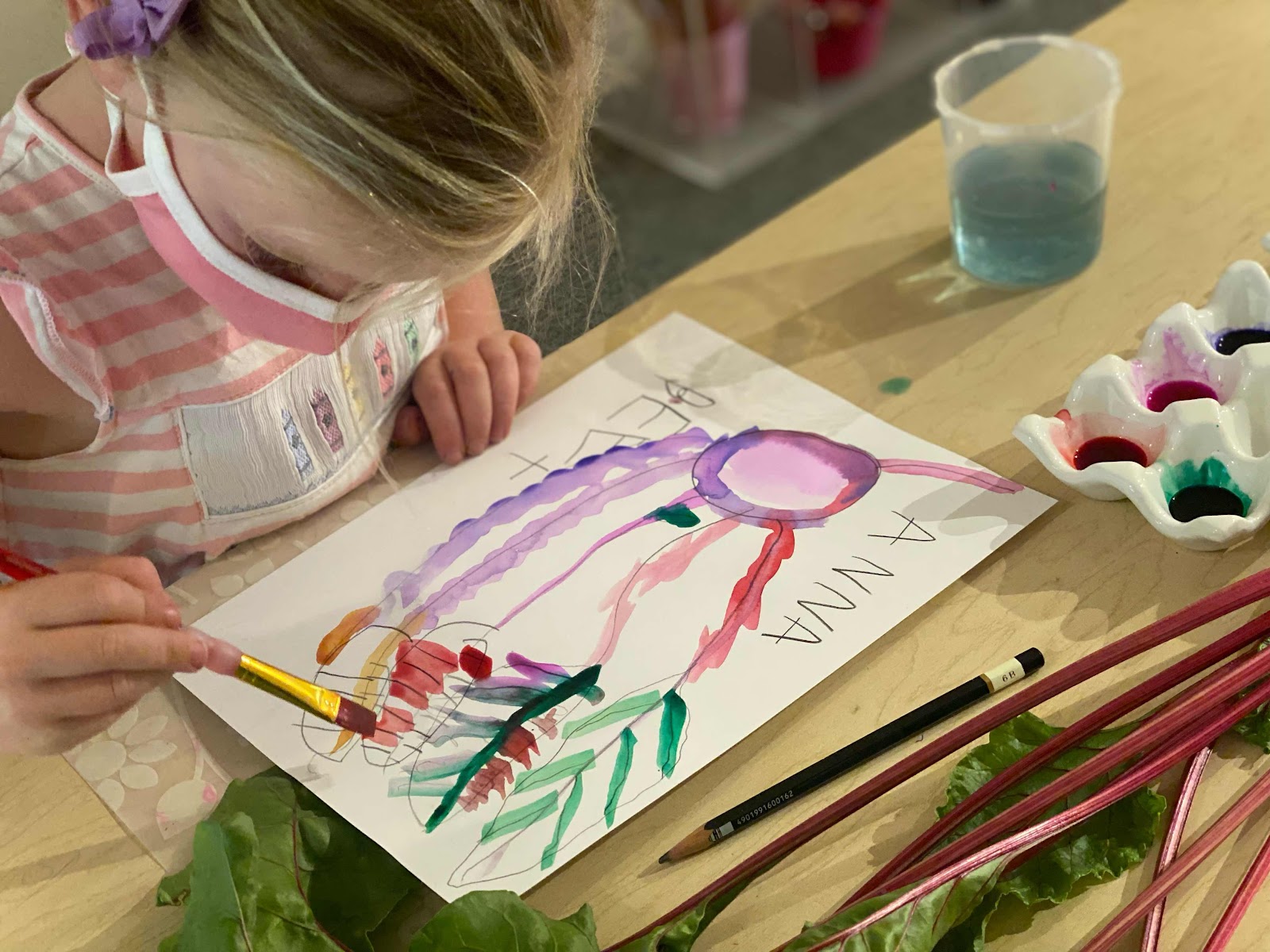
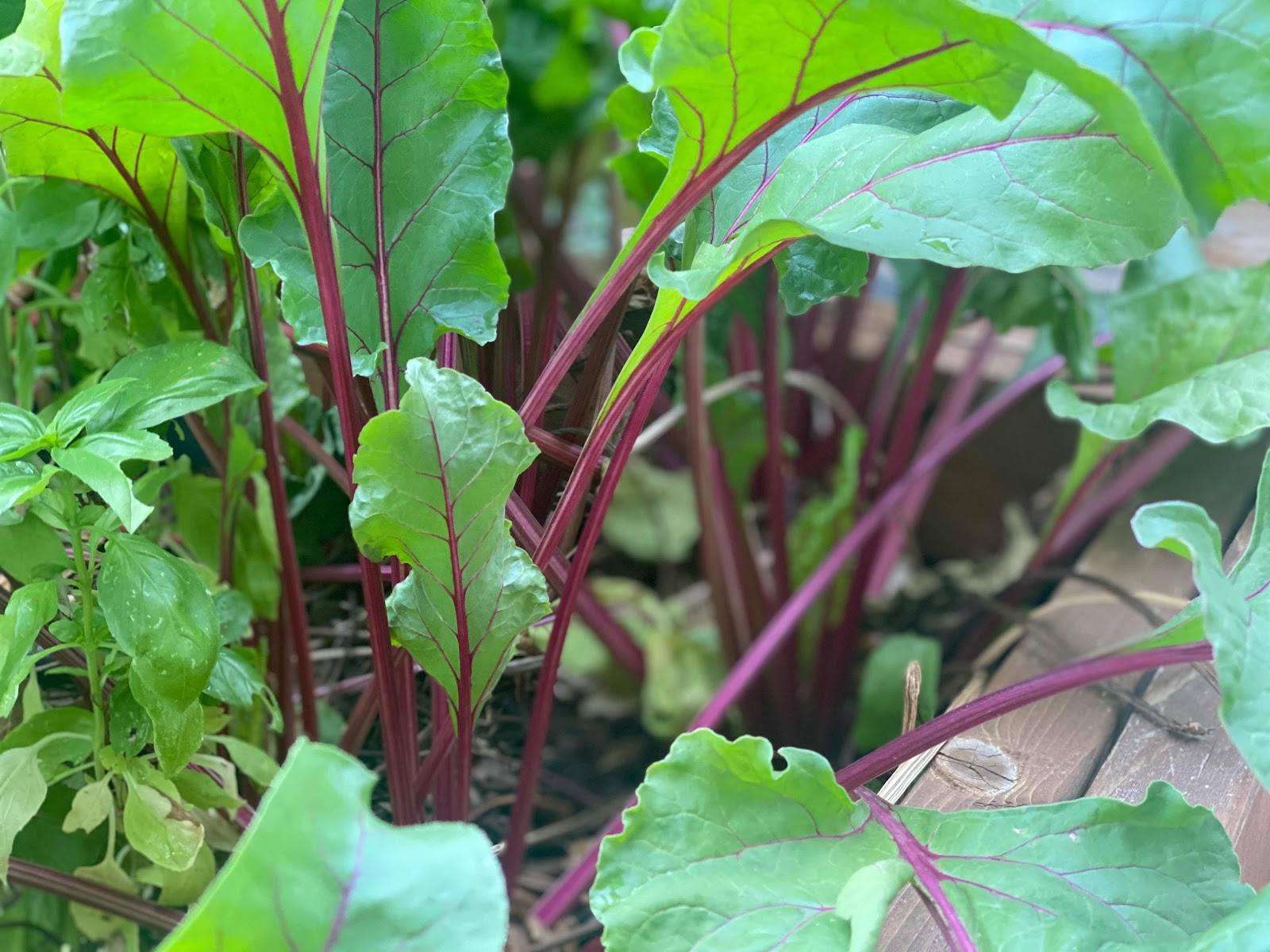
Beets grown in our garden formed the inspiration for this week’s observational drawing. 

Observational Drawing helps us to slow down and really observe the subject.  Look at the detailed drawings. Need I say more?
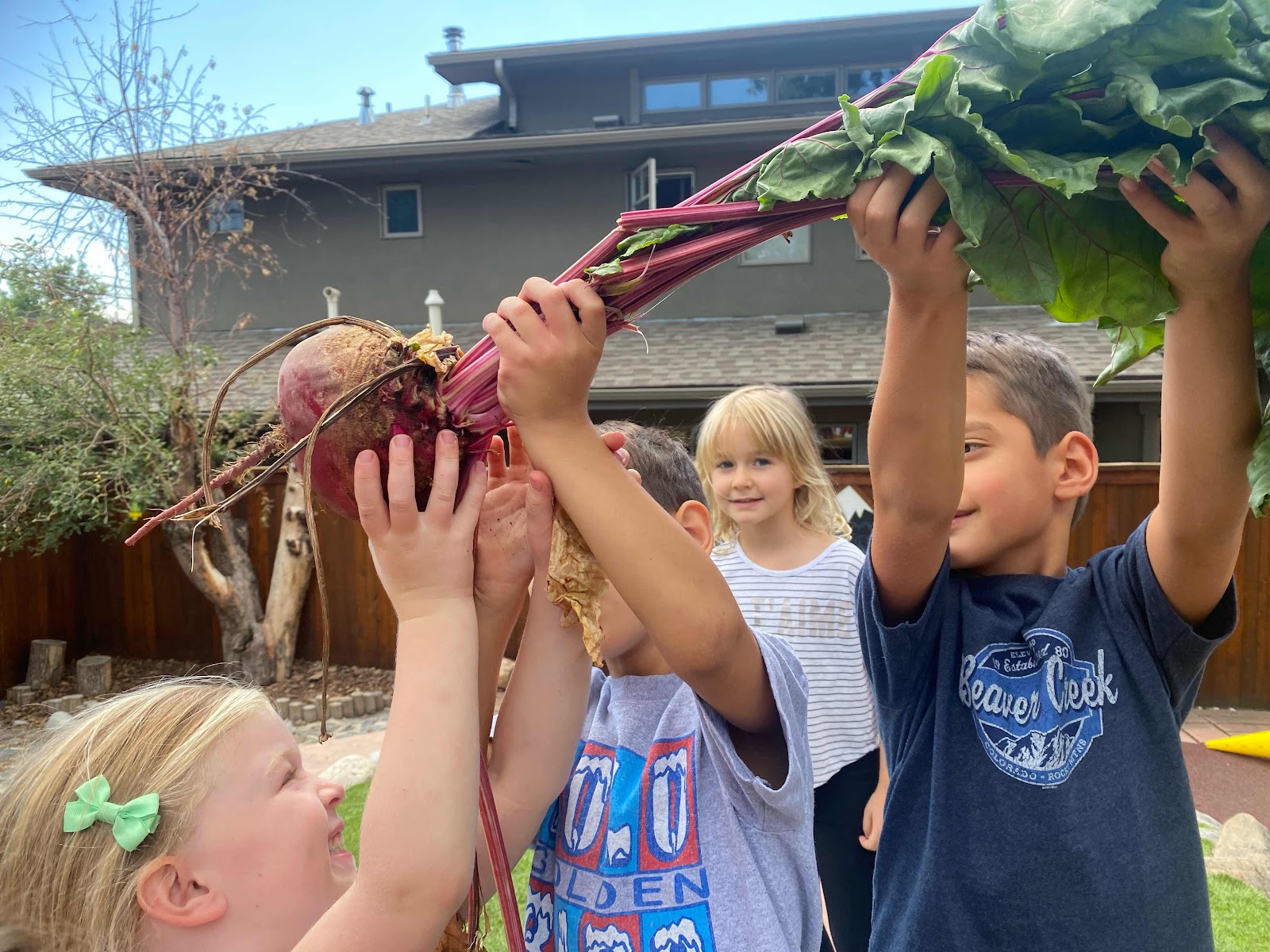
We had so much fun with first round of beet drawings that  decided to pick another one. We were astonished by its size!


Which inspired even more drawing!

To further celebrate nature’s bounty I harvested apples from my home tree and BJ collected crab apples from the trees in the front of the school and together we made apple butter with the children!


The recipe is simple: lots of apples, sugar to taste, cinnamon, cloves, lemon juice, a dash of salt and some water. Cook long and slow in the crock pot, whisk it smooth and serve! Yum!!!

Dramatic Play:
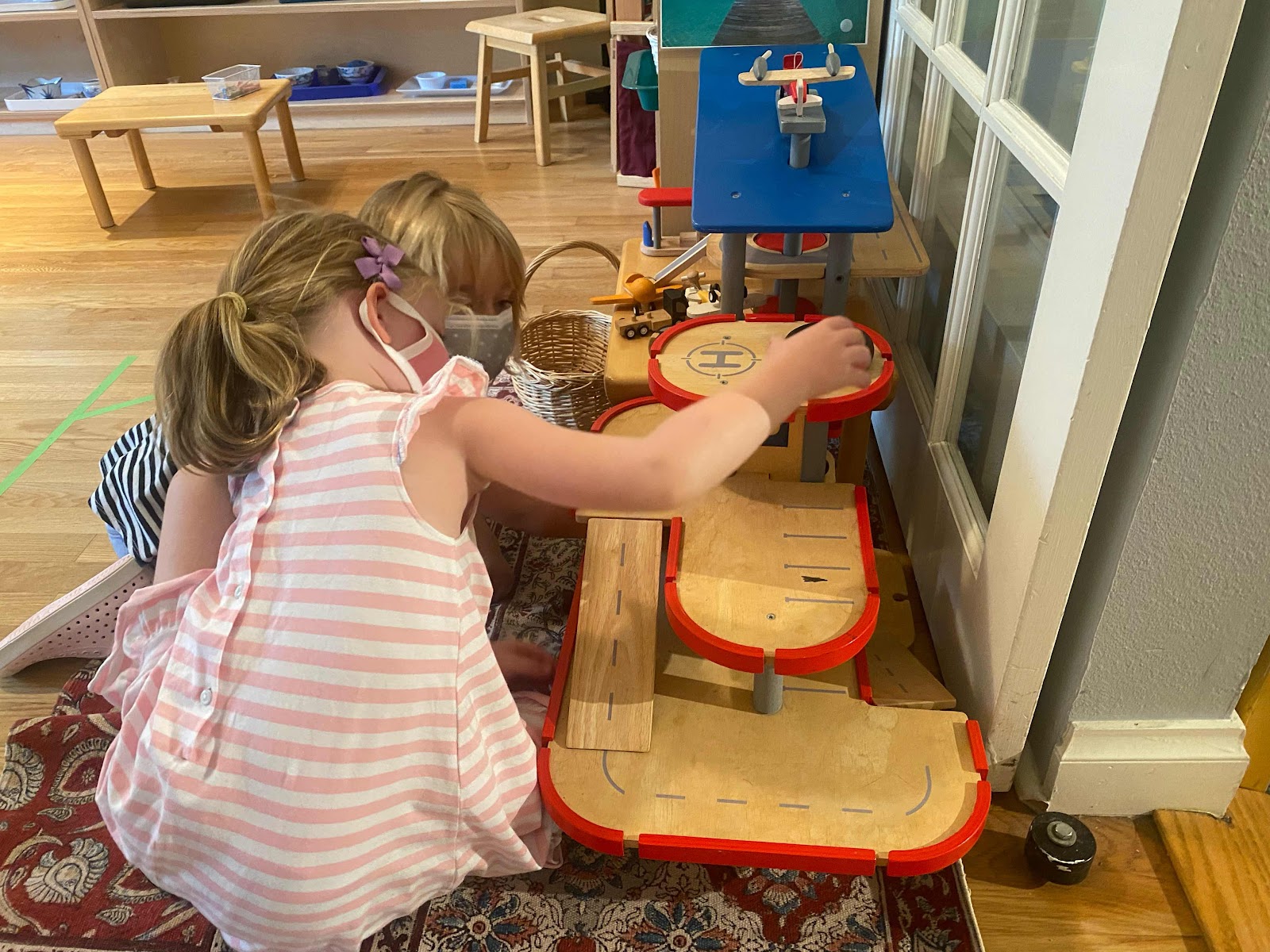
We brought in some wonderful wooden airports with ramps and pulleys for the children of Ward Hobbs to use.Thier travel play is a joy to watch and their conversations are connecting nicely with the classrooms geography materials.  (Notes on play at home…Encourage your child to enjoy play for its own sake. They needn’t look to you for affirmation about the joy of an activity. Play, by definition, is a reward in and of itself. Redirect them back to their own joyful barometer whenever possible with observations rather than praise… “I see you have lined up all your cars. That took a lot  of work. How do YOU feel about that?” .)

What do you do when there’s no people to populate your airport? Make your own!!! (Hint: that’s why I removed the people😉)

XP Corner:
To extend the XP story writing project, the children and I thought about what matters most to them before using the language of drawing to communicate our ideas on paper. Our observational drawings earlier in the week helped us to slow down and really focus on communicating, in line and color, what we love. Here are a few examples:


Stay tuned next week to see what else we get up to!

Thursday, September 9, 2021

440 is back in the studio!


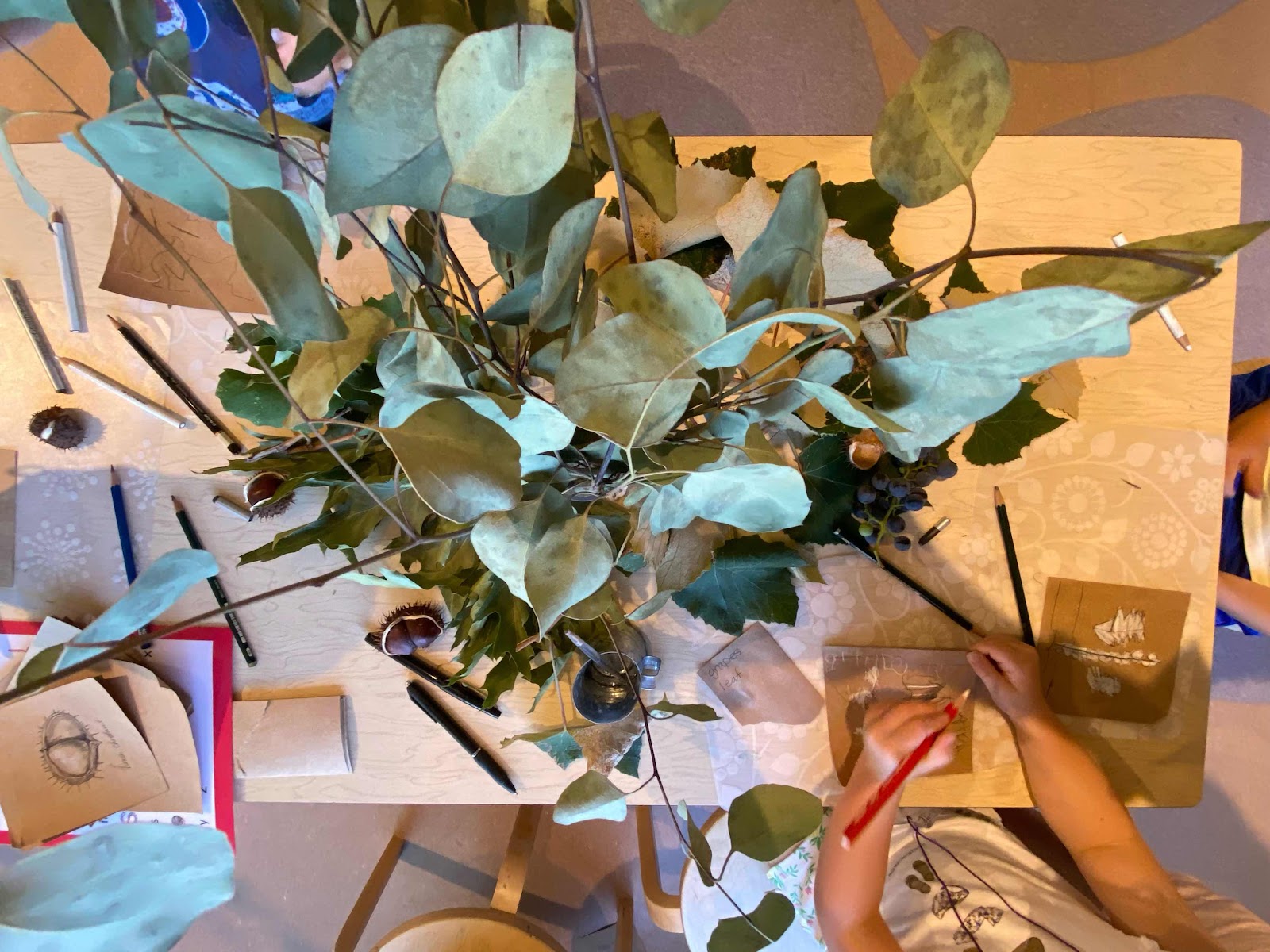
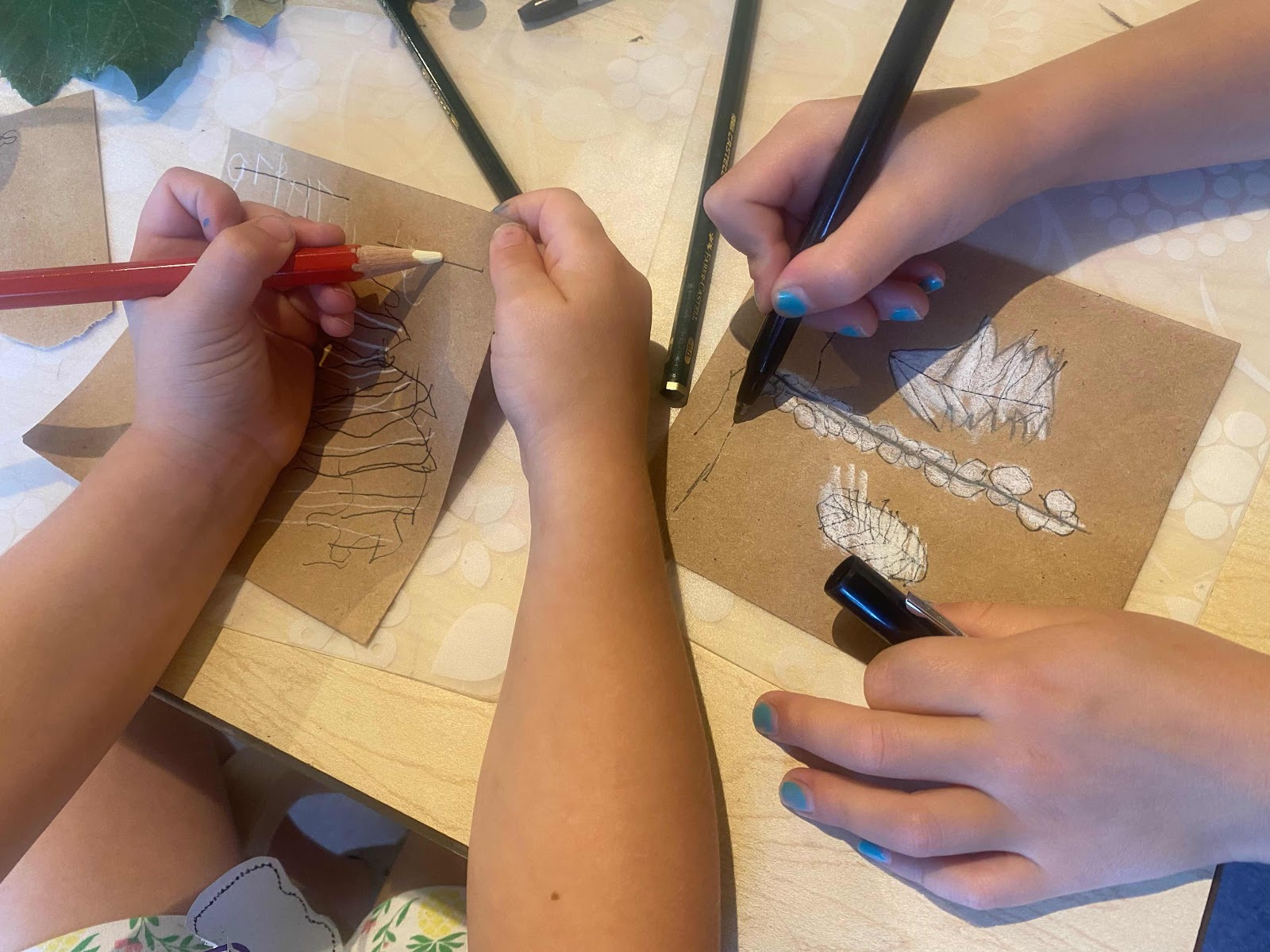
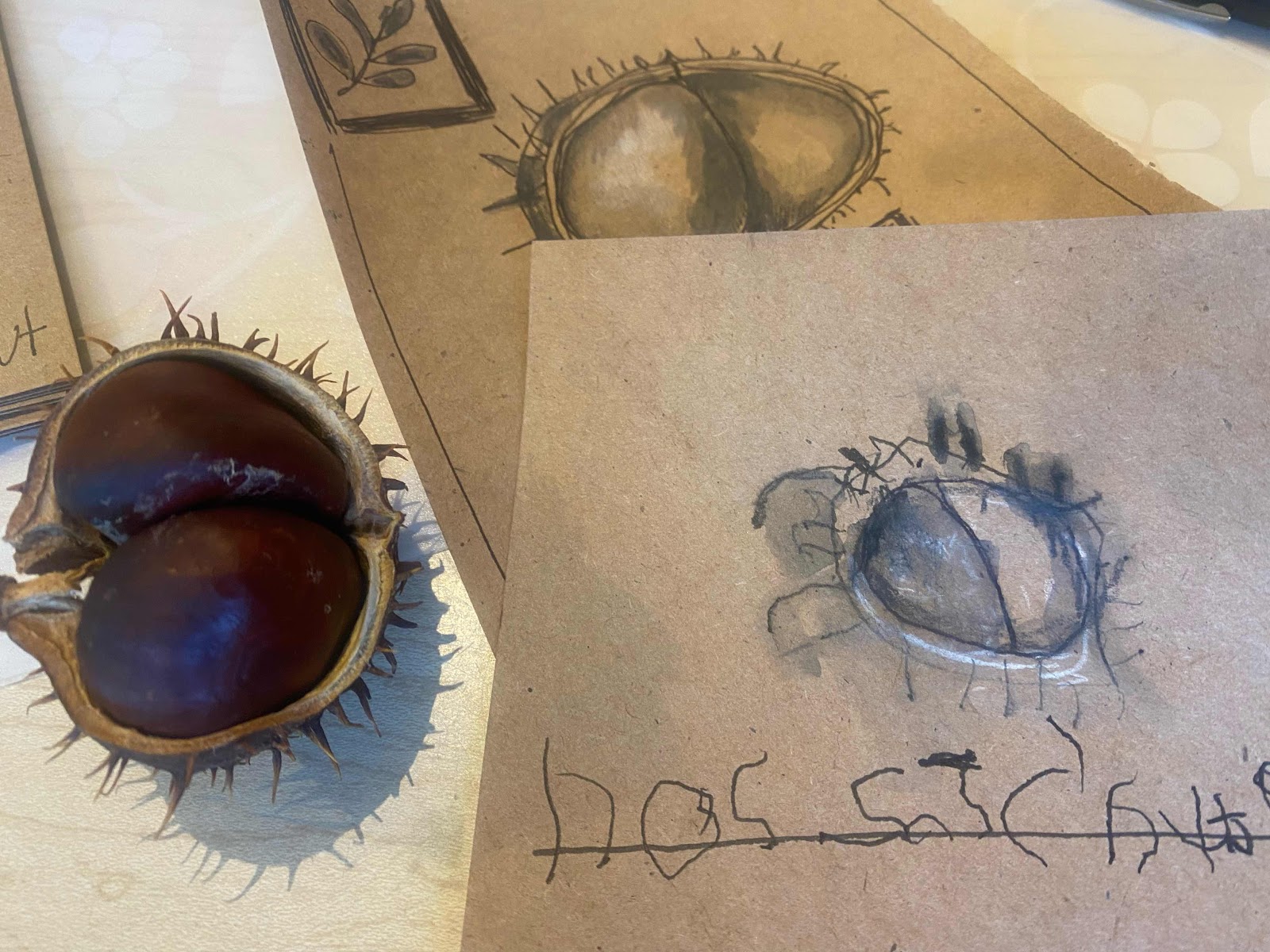
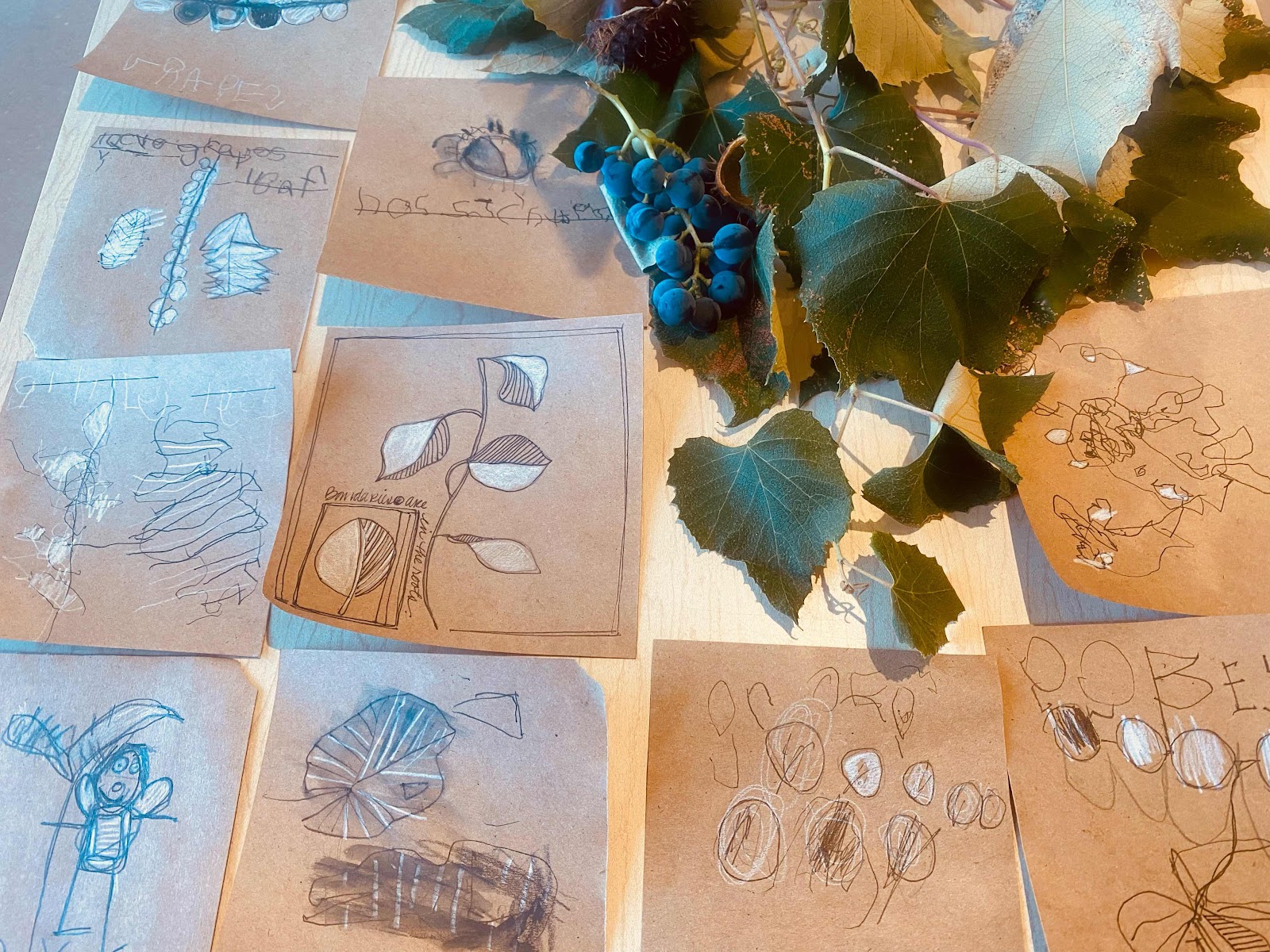
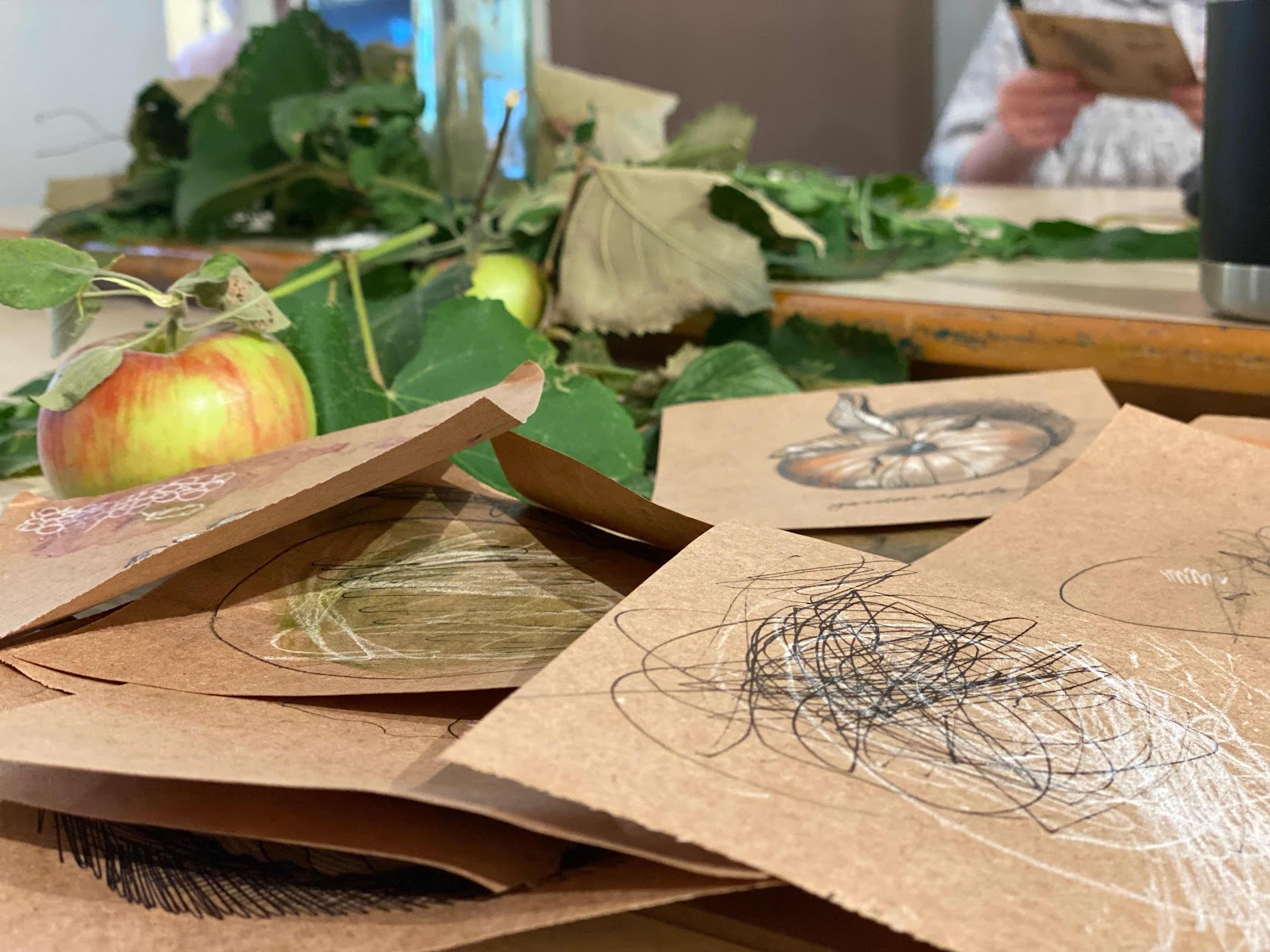
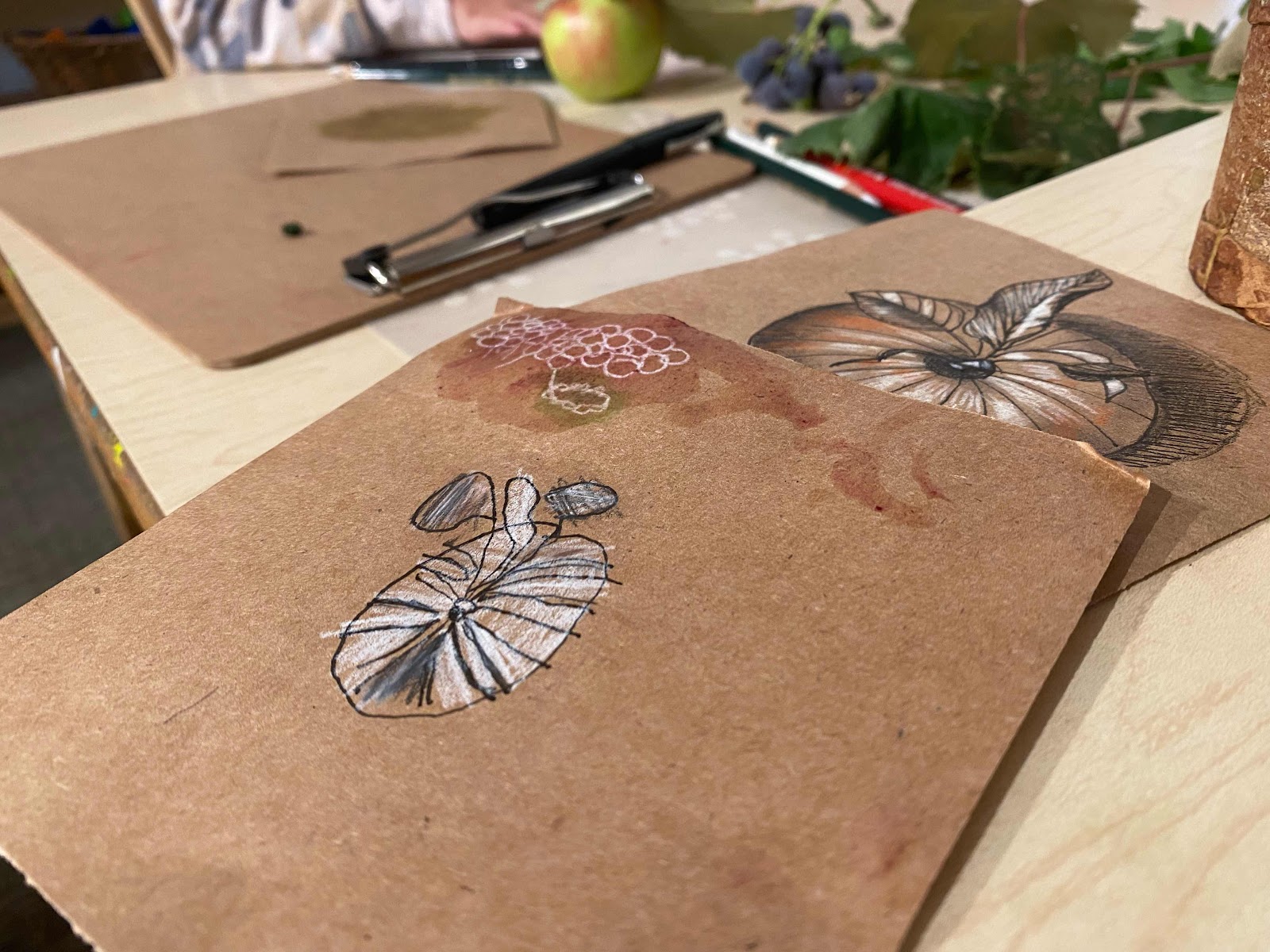
I am so happy to have the studio open and running for 440! Today we explored observational drawing using natural materials from the backyard and surrounding neighborhood. I set out brown paper, 6B pencils, black pens, white Prisma pencils and water soluble graphite.

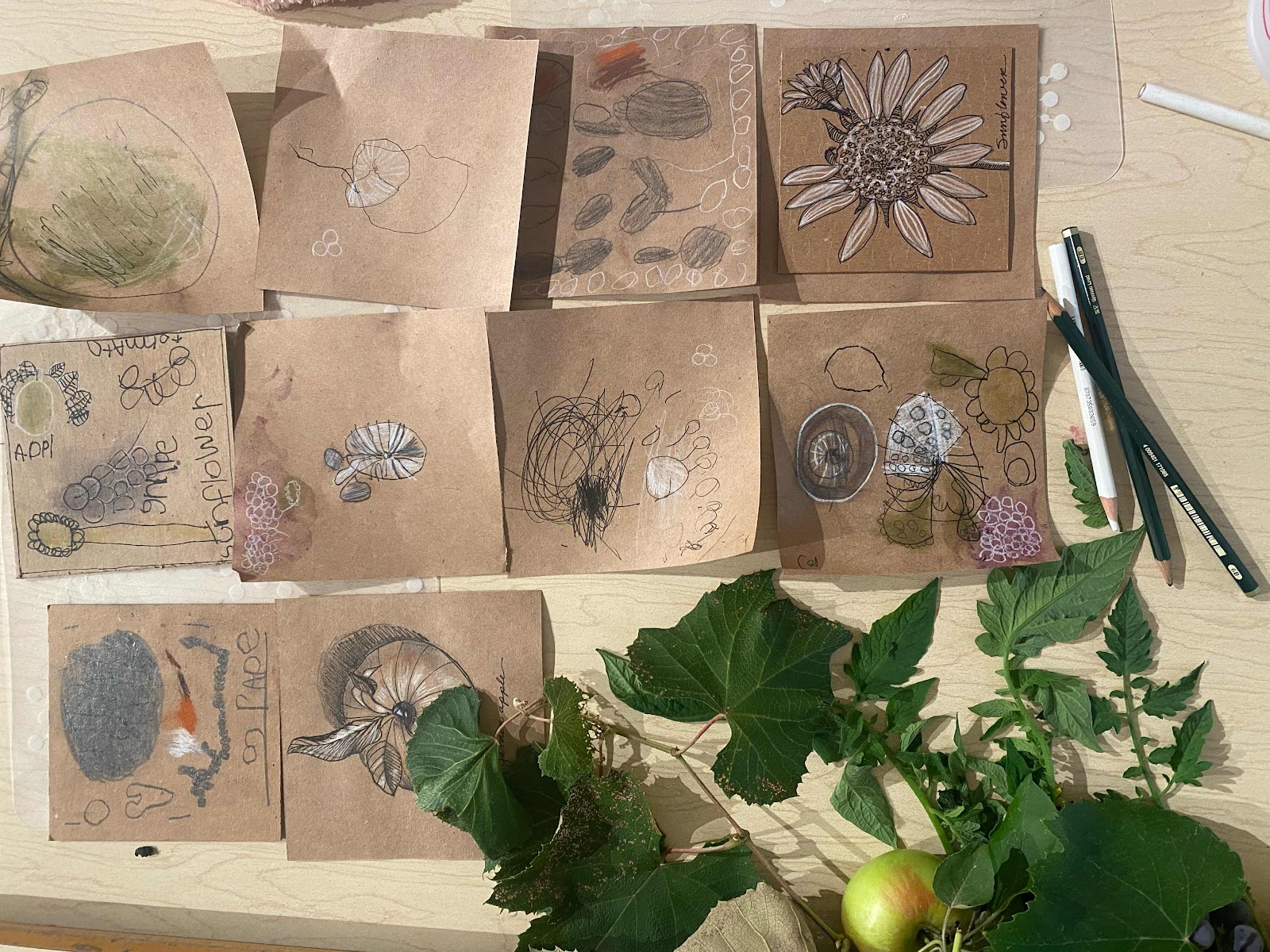
The children took their time really looking at the leaves and grapes and seeds on the table and drawing what they saw using the materials at hand.

Once our botanical illustrations were complete we added labels.

Here are a few of their wonderFULL creations!

XP Corner:

The 440 XP is interested in oceans! And things that inhabit the ocean, particularly: sharks, mermaids, sea monsters and rainbow fish!

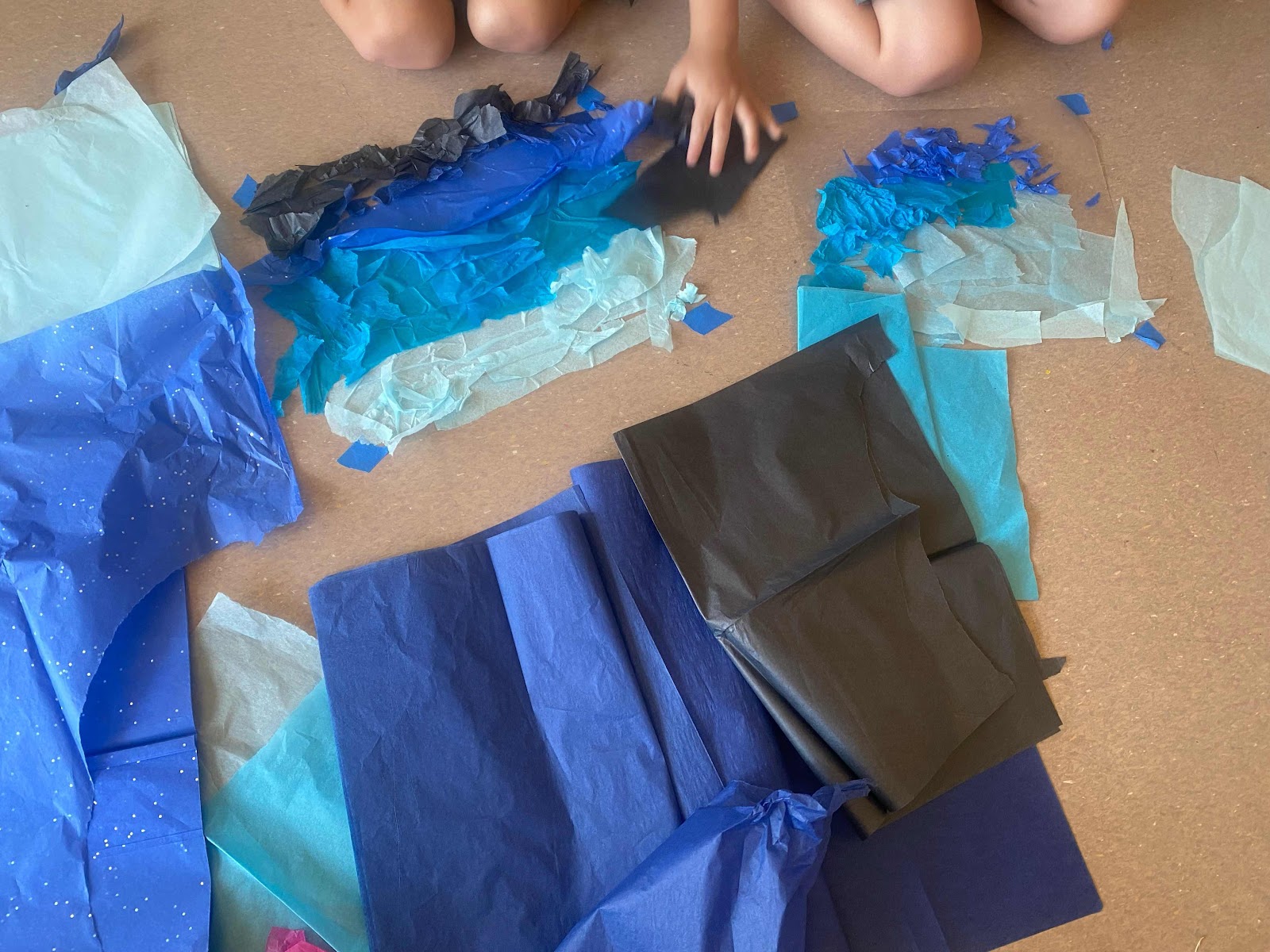
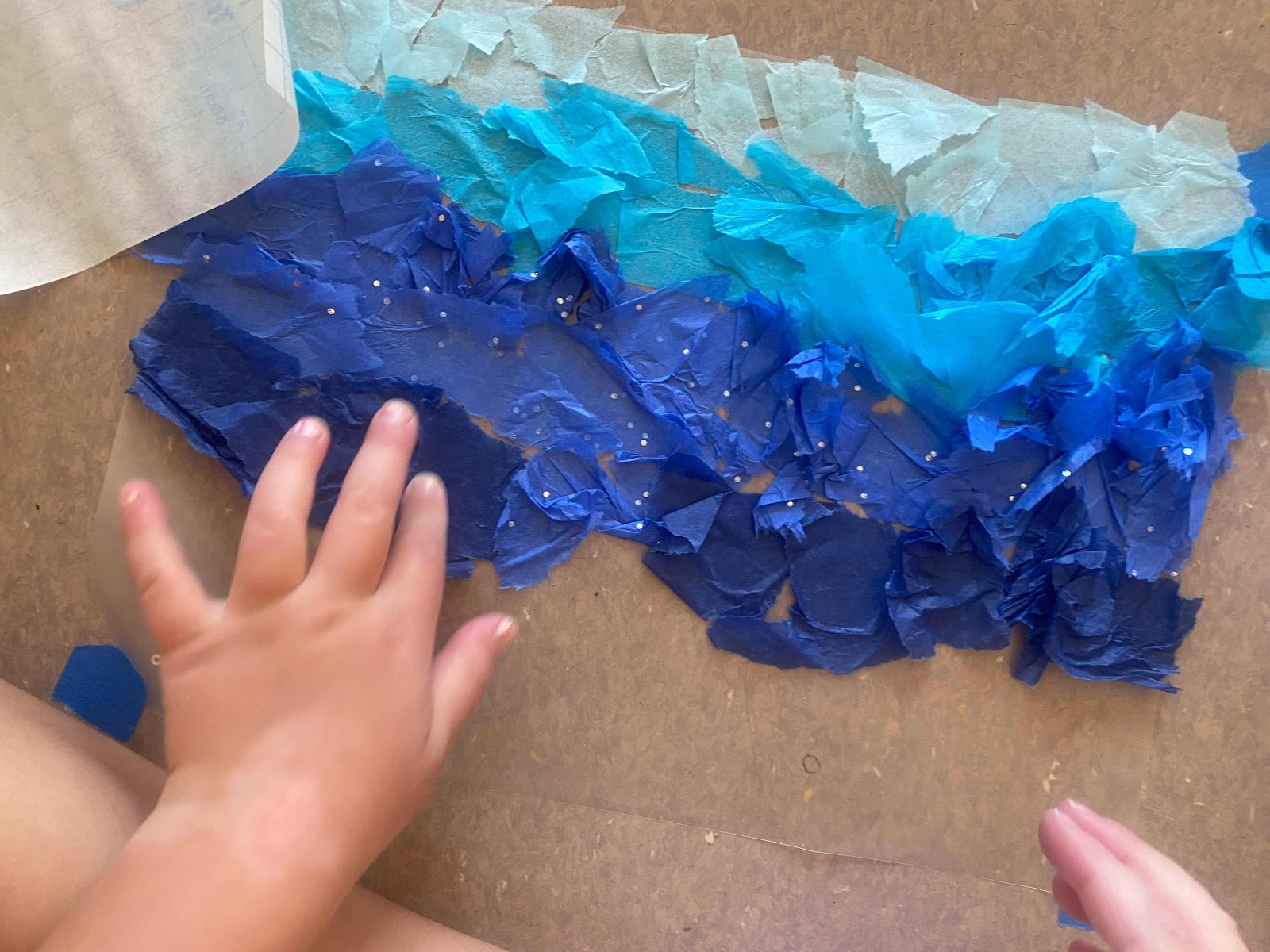
So we began our afternoon in the studio, talking about the layers of ocean and how light has to filter through so much water. In fact the deepest ocean is darkest black. 

To further our thinking, we gradated shades of blue from lightest to dark, then created our own layered oceans using contact paper and colored tissue

Stay tuned next week when we will populate our oceans with our favorite oceanic creatures!

Wednesday, September 8, 2021

Ward Hobbs is back in the studio!


The studio is up and running! This week in Ward-Hobbs we are focused on observational drawing using some natural materials from the playground as inspiration.
I set out graphite pencils 6B, white prisma colors, and black pens. No color. One of the children asked me for some green and I said what do you see on the table that we might be able to use. She discovered a green tomato leaf and we tried rubbing it on the paper.
I had placed some grapes on the table as well, from the outdoor arbor, and one child discovered that she could remove the purple skin and rub that onto the paper for a violet hue. 

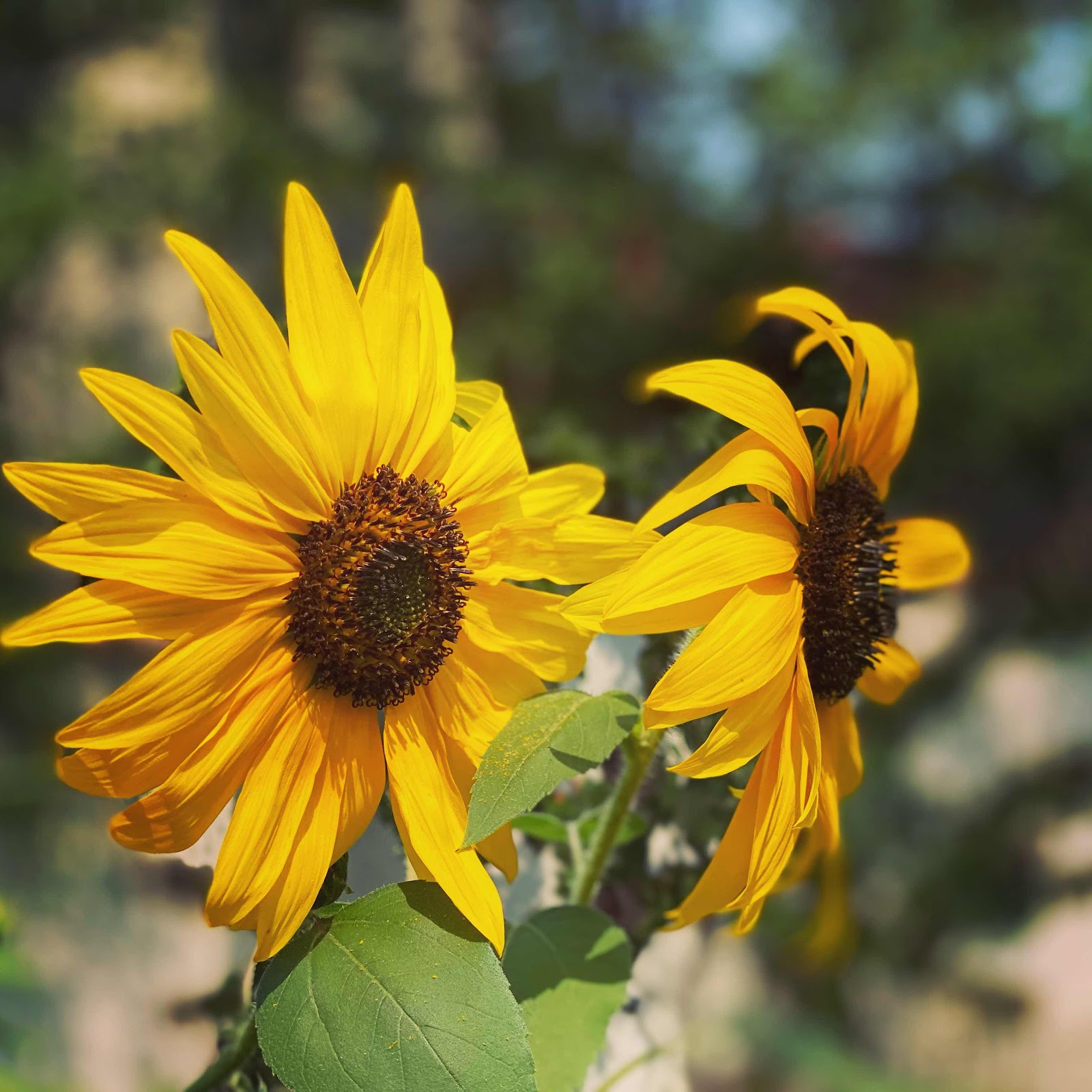
Another child chose some sunflower petals and exclaimed, “It works! It is a very faint yellow Angelina but it IS yellow.” And it was indeed.
The resulting drawings were beautiful and subtly infused with natural colors.

XP Corner:
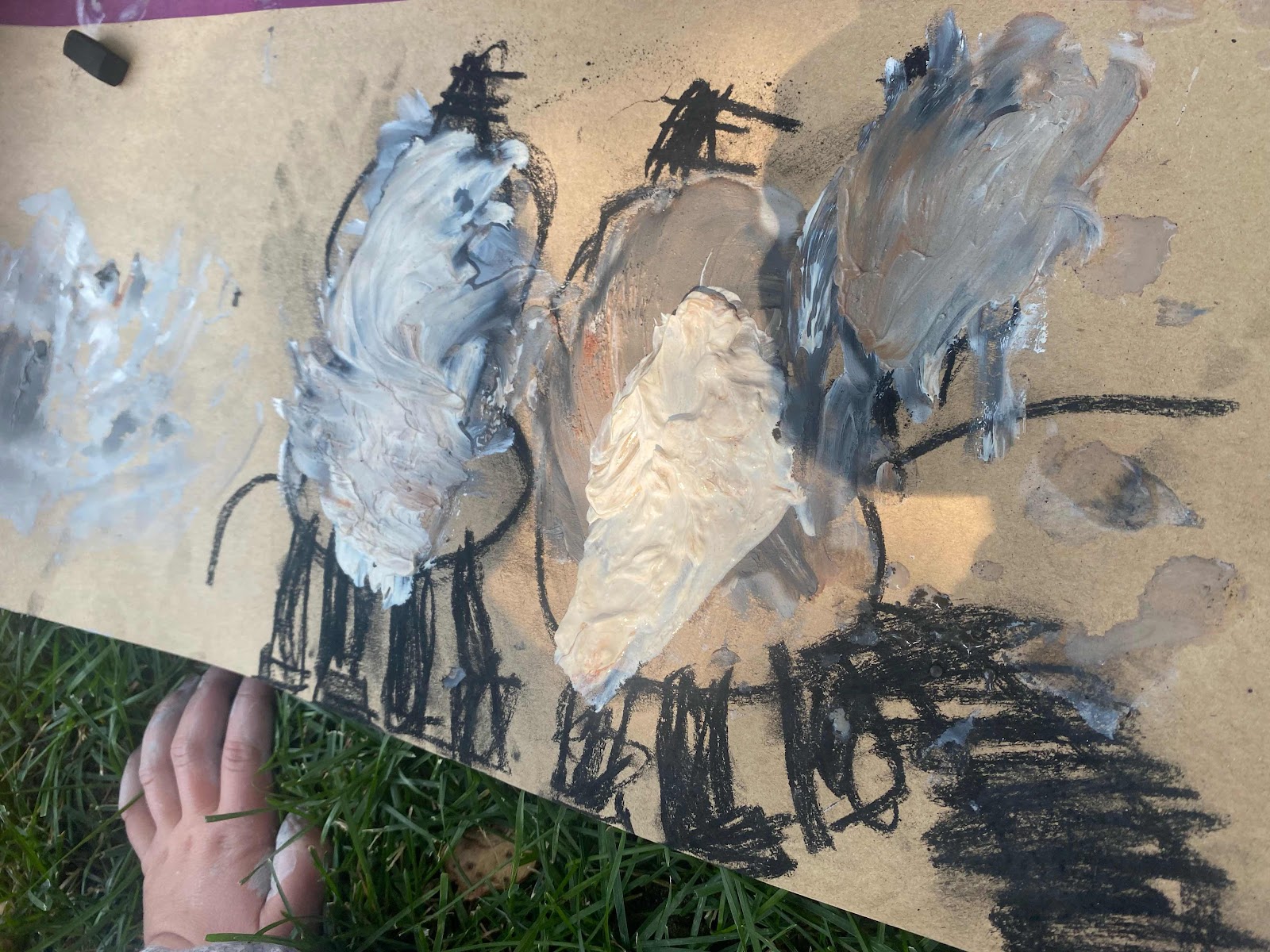
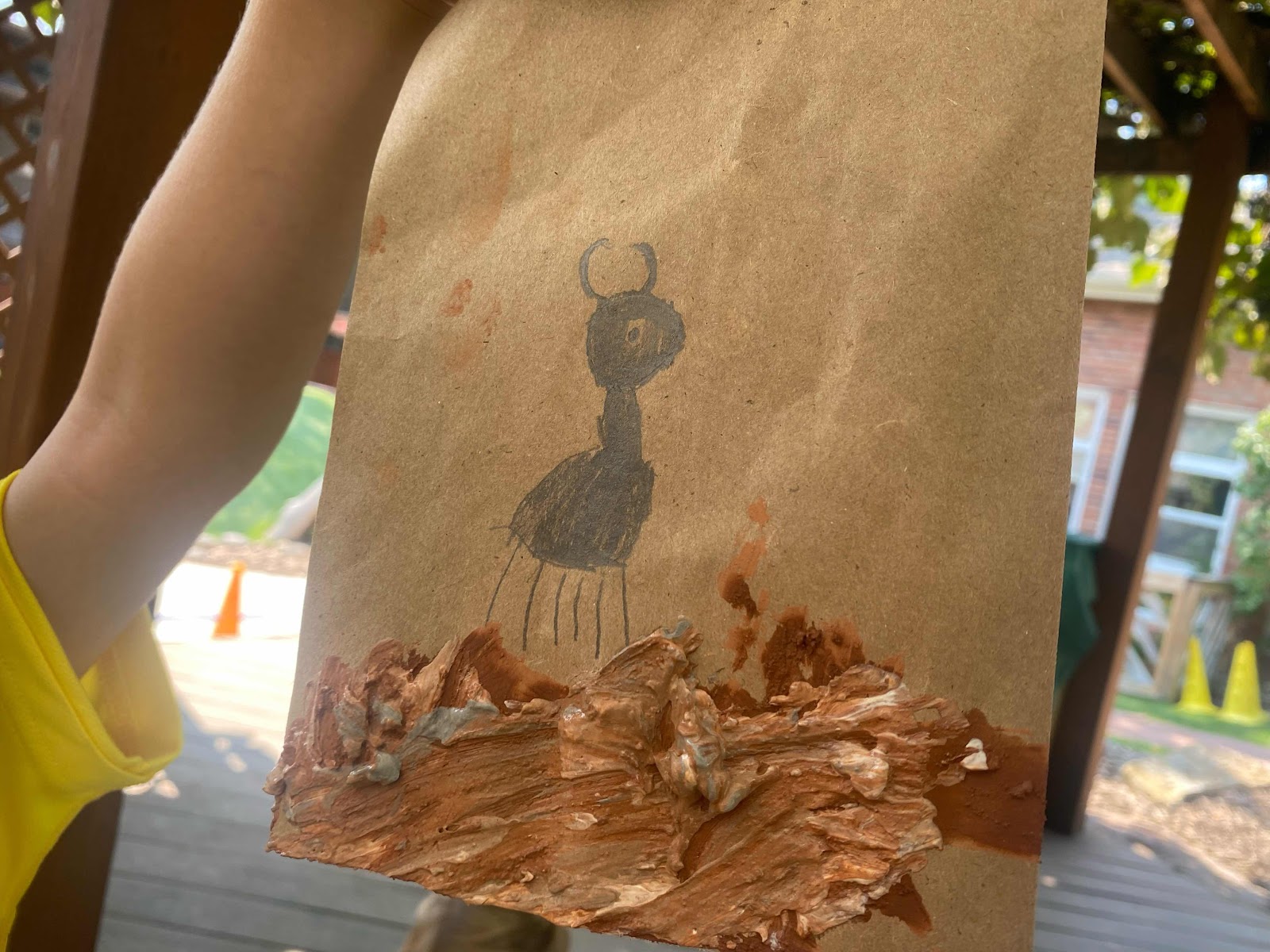
The Ward-Hobbs XP class is beginning a writers workshop and story telling unit. The teachers and I agreed to begin with a studio inquiry inspired by ancient cave paintings.

The XP children joined me outside where we talked about our ancient ancestors living in caves and telling stories inspired by the things that mattered to them: community, animals and the hunt. And in order to write their stories they didn’t use an alphabet emulating sounds, rather they drew pictures. Pictures tell a story!

We discussed the limitation of materials our ancestors had at their disposal and agreed to write our picture stories on brown paper (no caves nearby) using three shades of watered-down clay (a gray, red and white) and charcoal. 

The results were positively wonderFull!

Wednesday, August 25, 2021

Welcome Back to the Studio

Amy and I are so excited to see and work with your children this year!  We look forward to discovering creative ways to collaborate with our Children's Garden Community in the months ahead!
Stay Curious and Full of Wonder and we'll see you SOON!


Sunday, May 2, 2021

The Importance of Wonder


It is mid-morning. The sun hints at the summer months ahead, as I walk around Denver’s largest lake alongside other city goers similarly seeking a bit of nature on a fine spring day.  Couples and families dot the park, lounging on blankets and feasting on warmth. A man hurries past, gesticulating wildly to no one in particular, while talking at a fast clip to coworkers piped in through bluetooth earbuds. A young man rollerblades a languid dance while singing softly to a song only he can hear.  Runners dart past, brows furrowed with concentration.  My uttered hello's are lost amidst an array of podcasts, playlists and calls. My smile, hidden behind a cloth mask, crinkles my eyes in welcome.  I walk on.

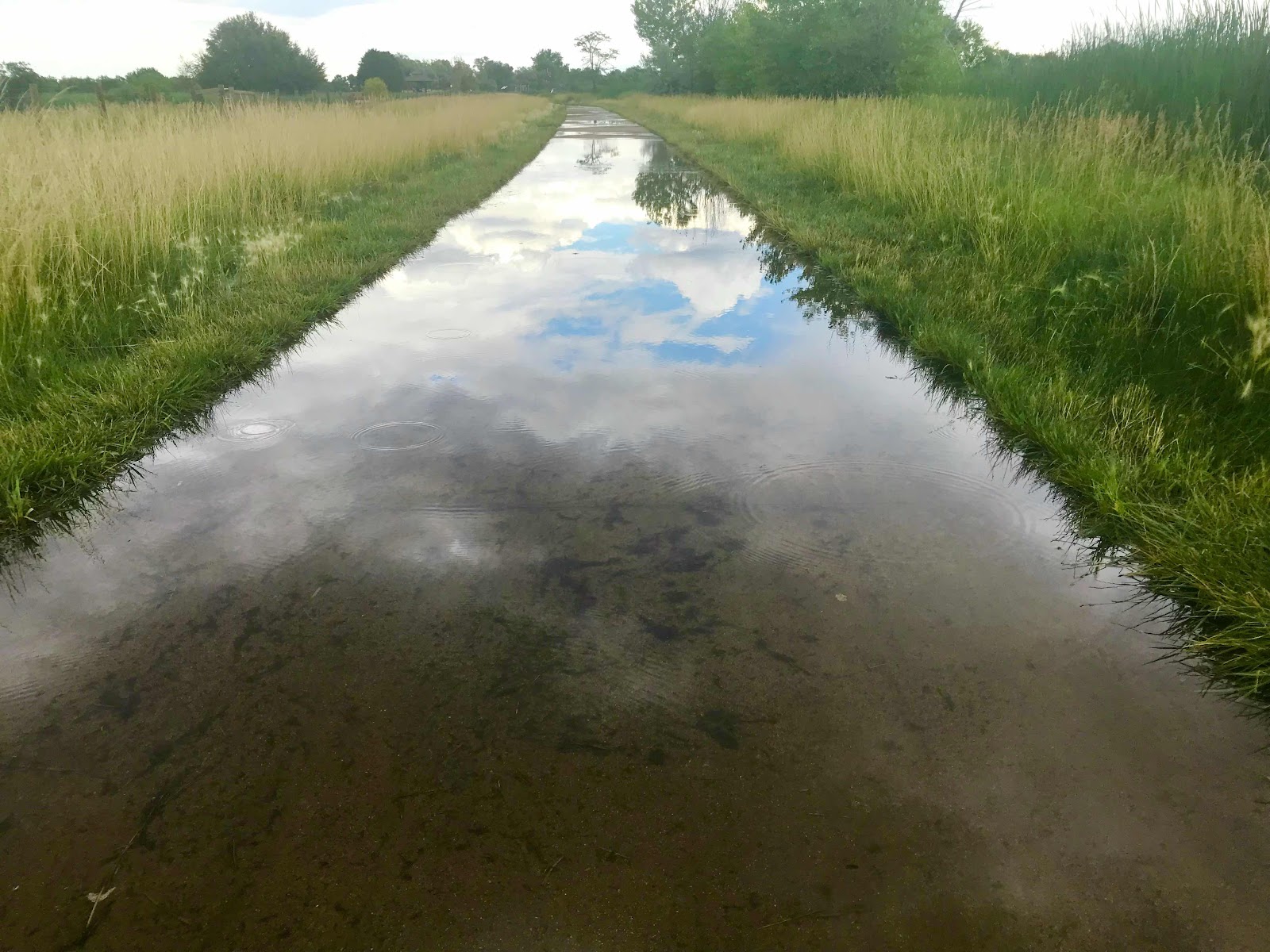
The lake narrows as it bends around its eastern edge. I round the corner and see her, standing in the center of the path, three-foot-tall on tiptoe, wearing a yellow canvas hat pulled low over ruffled curls.  Her lemony sun dress layered atop rainbow striped leggings and a matching long sleeve shirt, pairs fashionably with her petal pink galoshes.  Her nanny watches from a nearby grassy knoll, scrolling through a smartphone.  The child notices me.  I smile.  She grins wide in return with the welcoming enthusiasm of a three year old.  She points out at the lake.  I nod to her nanny before crouching beside her to peer in the direction of her outstretched hand. 

“Clouds”, she says.  I nod, quiet for a moment as we take in the beauty of a blue sky dotted with cushiony, soft clouds.  I point in the same direction and say, “Look!  The clouds are in the water too.”  Her brow furrows, looking at the reflected sky.  “Yes! Yes!”, she agrees.  Suddenly earnest, she tells me, “I have clouds at my house too.”  I nod.  Serious, I take a sip from my water bottle and reply, “I have clouds in me too.”  She looks at me and my orange nalgene bottle for a minute, considering, and then smiles and nods, knowingly, “My mom does too”.  We smile.  She shows me a stuffie tucked beneath her arm. “Pleased to meet you,'' I say, nodding to the well loved friend. We look again at the clouds.  She hugs her stuffie.  I stand, thanking her for reminding me to see the clouds.  She waves back, bouncing on her heels.  I walk on, suddenly more aware of the bustling adults who don’t seem to notice the clouds in the water, the geese swimming along the shore or the chak-chak-syrupy song of a red-winged black bird perched atop swaying cattails at the water's edge.  I think of children and all they can teach us. 

Several years ago, while studying community involvement alongside my students, we began regular walks in our urban neighborhood. We didn’t walk far.  We moved at the pace of a young child, pausing often to marvel over dew drops on a spider's web and the slow march of ants across the sidewalk.  The children noticed ordinary things with extraordinary delight.  They waved enthusiastic greetings to the local garbage truck as it noisily rumbled up the street.  They stood in transfixed awe as enormous cranes delivered building supplies to ant sized workers atop six-story buildings.  I asked a group of five-year-olds why moseying along with them was so different from walking with grown-ups.  A boy raised his hand, blue eyes intent behind rimmed spectacles, and answered, “People notice what matters to them.  We notice spiderwebs and ants, because spiderwebs and ants matter to us.  Everyone notices what matters to them but not everyone cares about the same things.”   I smiled, amazed again by the clarity of a child. He was right of course.  We all pay attention to what we deem important.

This pandemic has been challenging to say the least.  On everyone. I have heard parents express a growing frustration and concern over what has been dubbed, ‘the lost year’.  Their worry is that children are falling behind in development and education.  I understand. This hasn’t been easy. My own son is in middle school and was no less affected by a year spent learning at home, alone and untended, behind a computer screen.  And yet the year wasn’t lost.  How could it be?  Children are always learning.  

 As adults, we prioritize reading, writing and arithmetic because they matter to us.  And they should, we need them to function in society and our children will too, along with a great many other things.  Schools are meant to prepare children to meet the future. But when the three R’s become the only thing we notice we are missing a bigger picture. We are like my fellow lakeside walkers who overlook the clouds and bird songs amidst a barrage of busy.  We can ask ourselves if our view is complete?  Is there value to listening to the birds outside an open window?  Is there value in the boredom that results from an unplugged afternoon?  Is a child learning when at play? Have our children gained anything from more family time?  Has less structured activity resulted in something positive?  Was curiosity allowed to mature? And wonder?  

As an early childhood educator, working and learning alongside children for more than twenty years, I say, unequivocally, the year was not lost.  It would only be lost if we failed to live it.  Our children are not behind.  Their traditional learning was upended.  Their worlds turned upside down, as everyone’s was.  But they aren’t behind.  Humans have an intrinsic capacity to learn.  It’s one of the amazing things about us.  We can trust that.  If we push young children to value what we value we often meet with resistance.  Drilling a young child at home to learn their letters and numerals may result in them becoming work avoidant at school.  Why?  Because play and wonder are childhood needs. 

If we overlook the clouds we inadvertently teach our child that clouds don’t matter, “Seen one, you’ve seen them all.”  When we rush past the garbage truck without a genial wave, we tell them to prioritize busyness over pleasantries.  When we speak of a lost year what we are really saying is that we love our children and we want them to thrive. This pandemic has been hard.  There’s no way around it,  but I guarantee the year was not lost.  You can trust your child’s intrinsic capacity to learn, to adapt, to grow and develop, like a bud freshly opening into a flower.

As spring arrives in the northern hemisphere bringing birds from distant environs to our newly budded trees, children will invite us to slow down and notice the world around us.  They will ask us to allow this moment, in all its messy splendor to move us. They will teach us what matters to them: a cloud on the horizon, a butterfly, a dump truck, a silly tik-tok video, a stuffed toy, the sound of water, a bird in flight.  And if luck is on our side, we may remember just how much those things matter to us too.  Because amidst our busy lives, wonder is a thing that also needs accomplishing.
Thursday, April 22, 2021

Dinosaurs on Display at the Artisan Center

This year’s window display at the Artisan Center is not to be missed! Head on down to 2757 E 3rd Ave in Denver to see the children’s creations live and in person! And when you do be sure and stop in to support this wonderful local business! They even have some dinosaur puzzles, books and planters, prepped and ready to brighten up your home. The window display will be up through the first few weeks of May. Enjoy!!!

The Case of the Missing Bird

Friday, October 2, 2020

The Child's Right to Wonder


The Child’s Right to Wonder

By Angelina Lloyd, MEdPsy


In the Autumn of 2009, I drove to school beneath a  canopy of sun dappled leaves turning orange, yellow and red.  I mentally prepped for my morning line time, eager to present a lesson on the changing seasons.  Imagine for a moment: the lights of the classroom dim and a single lamp, sans shade, stands bright at the center of the circle, the sun.  I theatrically raise a rainbow colored globe tilting on its metal axis, the earth.  I turn it ever so slowly, explaining that one rotation of the earth on its axis is a single day.  Together we watch light fall on globe, night and day.  I demonstrate the spinning of its axis as we make our year-long trek around the sun, 365 (and ¼) days. I point out how the northern hemisphere tilts away in the cooler months and toward the sun in the warmer months. Voila’, seasons explained.  


I parked my car, ready to set things up before the children arrived.  And then, quite suddenly, as I stepped onto the sidewalk, a leaf let loose from a branch above and twirled in widening circles toward the ground, landing amidst a raucous display of color.  I was transfixed, my lesson forgotten amidst the beauty.  I listened to the crunch of leaves as a dog and its human walked past.  Unexpectedly, I no longer felt prepared for my circle time. Standing on a mosaic of color, I was humbled by my own, well intentioned arrogance.  Why did I think it was my job to explain something without first pausing alongside the children to WONDER?  Why would I prioritize my knowledge over their curiosity?  Why, when so many young children are experiencing their first conscious Autumn, would I not join them in their discovery?  


That moment changed the arc of my teaching career. 


I ditched my carefully prepared lesson and sat down at the circle beside them.  I said, “Whoa!!! Something major is happening outside!  On my way to school I noticed the leaves that were green, just last week, are now yellow and orange and red!!!  Have any of you noticed this?”  The enthusiasm in the room was palpable.  The children’s faces lit up, eager to share.  Instead of offering answers I joined in their curiosity.  Why are the leaves changing?  What does fall mean?  Why do some trees drop their leaves while others do not?  Why are these leaves red and those yellow? How does it work? We talked for days, then weeks. Their excitement only increased.  They brought in leaves and acorns alongside theories about why this might be happening and how. A four year old girl with bright blue eyes suggested, “Maybe the leaves like the color green, but they wear it so long it gets dirty and changes colors. And so they have to take it off.” A four year old boy with his brow furrowed in concentration offered, “If leaves stay green, they’ll get frozen, so they change colors.  Every leaf changes color.  And then the tree goes to sleep. Yep. That’s it”  Their ideas and thoughts swirled around us, brightly colored and full of possibility.   


We examined the leaves and the trees.  We watched the thermometer posted on the classroom window.  We graphed the temperature. It was getting cooler.  We posited new theories.  I wrote down their ideas, falling in love with their words like poetic invitations to wonder.  Did I ever give that lesson?  Yes, months later, but by then it wasn’t me sharing “my” knowledge, it was our understanding coming to fruition. It didn’t end our wondering it just broadened the scope of our questions.  


I’ve never been more grateful than I am for that single leaf, twirling to the ground, which invited me to pause, to linger and to wonder.  Life is a beautiful mystery and no matter how many answers we have there will always be more to discover.  I know it can be uncomfortable, but we can trust the children and ourselves to linger with the questions.  While I may have an answer, it has been my experience that “I don’t know” is one of the best tools in my teaching toolkit.  Curiosity is the cornerstone of learning.  When we encourage the right to wonder, we are transported, however briefly, into the landscape of childhood, where we might rediscover something great and genuine- a life filled with wonder.  Together we might take a moment to pause in awe at the beauty that surrounds us, one twirling leaf at a time.  


Friday, September 18, 2020

The Child's Right to Struggle

The Child’s Right to Struggle

By Angelina Lloyd, M.Ed.Psy

Several years ago while walking beneath a great, green canopy on a summer day, a butterfly fell on my arm.  It had tumbled from its chrysalis, wings sodden and far too wrinkled and limp to fly.  I was enchanted and spent the better part of two hours marveling as golden wings tentatively expanded and flexed beneath the warm sun.  There was no hurry. The butterfly worked its wings. Life takes time. Then, with surprising confidence, it took flight from my outstretched hand. I watched as the last flicker of yellow disappeared into a vast blue sky, reminded of the value of a struggle.  

The journey from caterpillar to butterfly is no easy business.  There’s the unsavory goop stage that happens within the chrysalis prior to its celebrated, albeit laborious, emergence from a metamorphic slumber.  The struggle to break free from the chrysalis is real and a well meaning but ill-informed bystander might try to help by snipping a neat hole at the tip.  Doing so will produce disastrous results.  Why? Because the struggle is necessary.  It’s vital.  As the butterfly wrestles with the walls of its former life it builds the strength to become the butterfly.  The effort forces the fluid from its body and into its wings.  

The struggle and the flight are inseparable. 

We have a right to struggle too. It’s how we grow. It’s how we learn. It’s obvious when watching butterflies and working alongside young children. It’s a little harder to see in ourselves.

When a child wrestles with activities that come so easily to us, it’s hard not to offer a helping hand.  They jostle with shoes and often come away with them cattywampus on the opposite feet.  They call for help when managing toileting needs or battling snow pants.  They want to draw a rhinoceros and then complain, “I can’t” when a blank sheet of paper is placed before them.  We have to remind our capable hands not to make fast work of it.  Their struggle, like the butterflies, is necessary.  It’s how they learn.  When a child groans in frustration we learn to wait.  We ask ourselves, can they do it on their own?  How much help do they actually need to open that snack?  Would a pair of scissors placed nearby do the trick?  

What if there's a disagreement on the playground?  Do we rush in with the swift arm of adult justice or wait?  When we delay our help we’re often surprised by the outcome. Of course, we’ll intervene if a situation escalates but more often than not a brief tug-o-war with the hula-hoop will result in a surprisingly innovative solution among the children.  “How ‘bout you be the sun first and I’ll be the moon and then I’ll be the sun and you can be the moon?” Agreed.  If I’d stepped in with my standard, “That’s her work.  I noticed she was using it first”, I’ve not only robbed the children of their right to struggle, I’ve prioritized my need for outward harmony at the expense of their emerging conflict resolution skills.  The same is true in the classroom.  We set up the environment to anticipate an, “I can’t”.  The works are designed to support their competence. When a child is asked to write their name on a finished work and answers with a nasally “I can’t”,  we direct them to their name card to remind them that they can, however imperfectly. They can. When a child spills a pitcher of water in route to table scrubbing we have mops at the ready for them to clean it up, not perfectly of course and certainly not punitively.  It’s the process that counts because it's all important.  The puddle and the pour.  The mismatched shoes and the tied laces.  The phonetic spelling of “BTRFLI” and the reading of a chapter book.  It’s how we grow.  We all have a right to struggle.  It’s uncomfortable but it’s necessary.  
So when faced with struggle, at home or at school, we can consider the butterfly.  An “I can’t” that becomes an enthusiastic “I can!”  opens up a vast blue sky of possibility and that struggle is always worth the wait.

Stay Curious and Full of Wonder,
Angelina

Thursday, September 3, 2020

Into the Unknown


Every year of learning and working alongside young children I begin with a research question and this year is no different. In considering what to study in 2020, I didn't have far to reach. We are, collectively and individually, face-to-face and mask-to mask with not-knowing. We are discovering the challenges and unease we experience when familiar structures, routines and social situations are disrupted.
Children possess a depth of naive-wisdom that our world needs, not merely as the adults they will one day become, but as the children they are. Their unique approach to life and living is needed now more than ever before in our generation. This video is an introduction to our research question. I invite you to join us on this shared journey into the unknown alongside the children. Together we will rediscover our common curiosity, creativity and responsiveness.
Stay curious and full of wonder,
Angelina

Sunday, July 5, 2020

Summer In A Jar: Refrigerator Pickle Recipe


Wondering what to do with all those summer veggies?  Here's a fun recipe for you to try at home with the children!  Mmm mmm good!