Thursday, October 10, 2019

Collaborative Research: Peace Education

I'm excited about another studio/classroom collaboration that is happening this year! Our Ward-Hobbs morning teacher, Claire, has been interested in Peace Education for a long time.  We've decided to begin intentionally documenting how we promote and practice peace in the school.   This study will allow us to deepen our practice and understanding of peace education.  I will be posting about our collaboration throughout the year, so all of you can join our exploration.
To guide our inquiry, we generated a primary research questions.
How can we as teachers of young children promote peace?
And then broke that down into a few supporting questions to further clarify our research:
  • How do we model peace in the classroom? 
  • How do our movements, words, tone and the lessons we give promote non-violent conflict resolution and mindfulness?
  • How do we demonstrate respect for each child and support them in recognizing and welcoming others as individuals within a group?
  • How do we recognize and nurture signs of empathy and care as they arise?
  • How might we model positive self-talk in a school environment and how might that benefit the children in our care?
Today Claire offered a Peace Assembly for the morning primary classes.  She began with a few deep breaths and a listening exercise with the singing bowl.
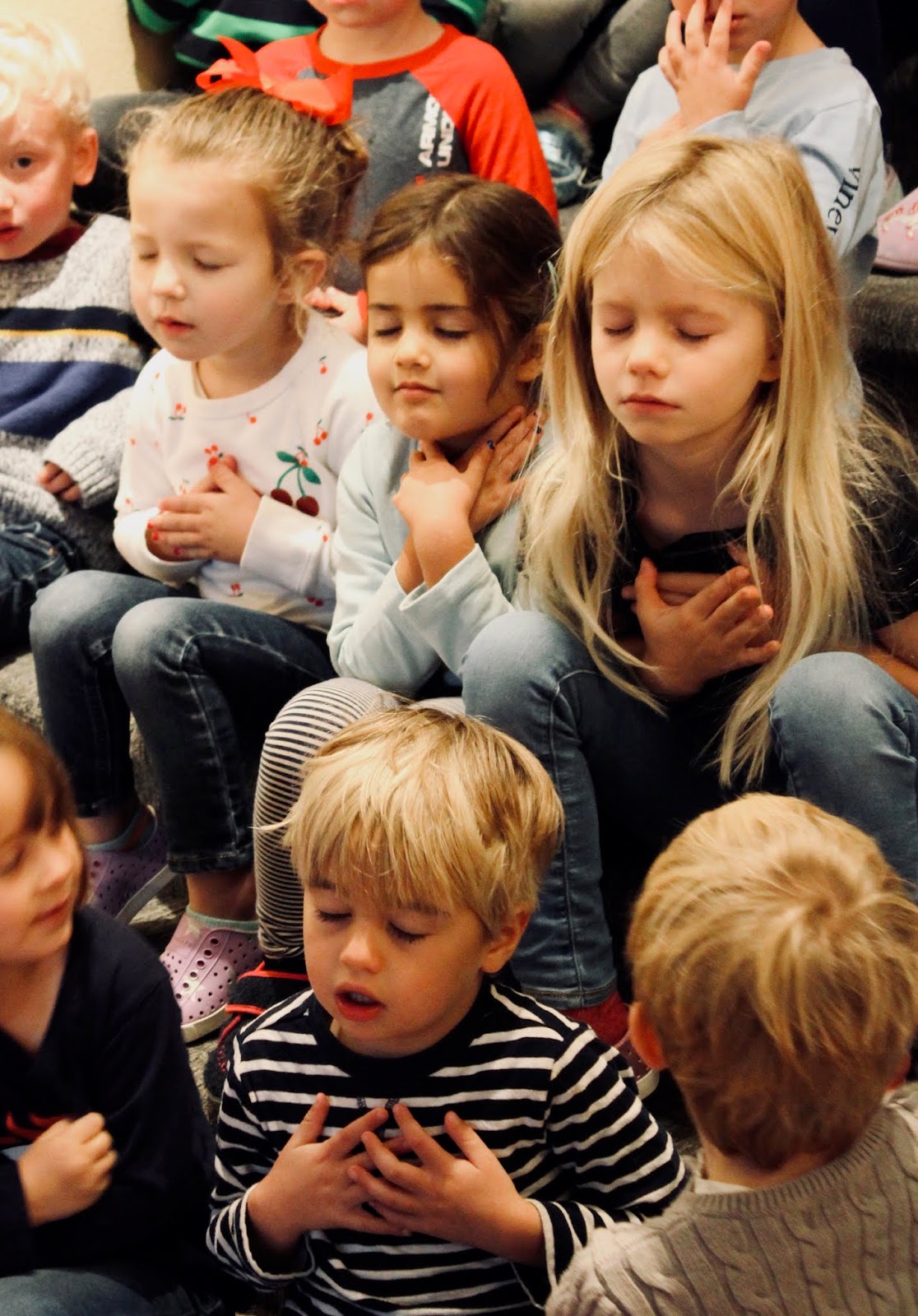
Next she invited the children to share what Peace means to them?
  • Making friends
  • Peace and quiet
  • Being Kind
  • Being friendly to your friends
  • Making friends with others
  • Loving people
  • Hiking in the mountains and having a good time
  • Being nice
  • Having fun
  • Being quiet
  • Being glad
  • Sharing
  • When you like to give people hugs
  • Hugs
  • Kisses
  • Love

Claire read the book, The Peace Book by Todd Parr.
And ended practicing Silence as a group.

Tuesday, October 8, 2019

Amy in the Studio

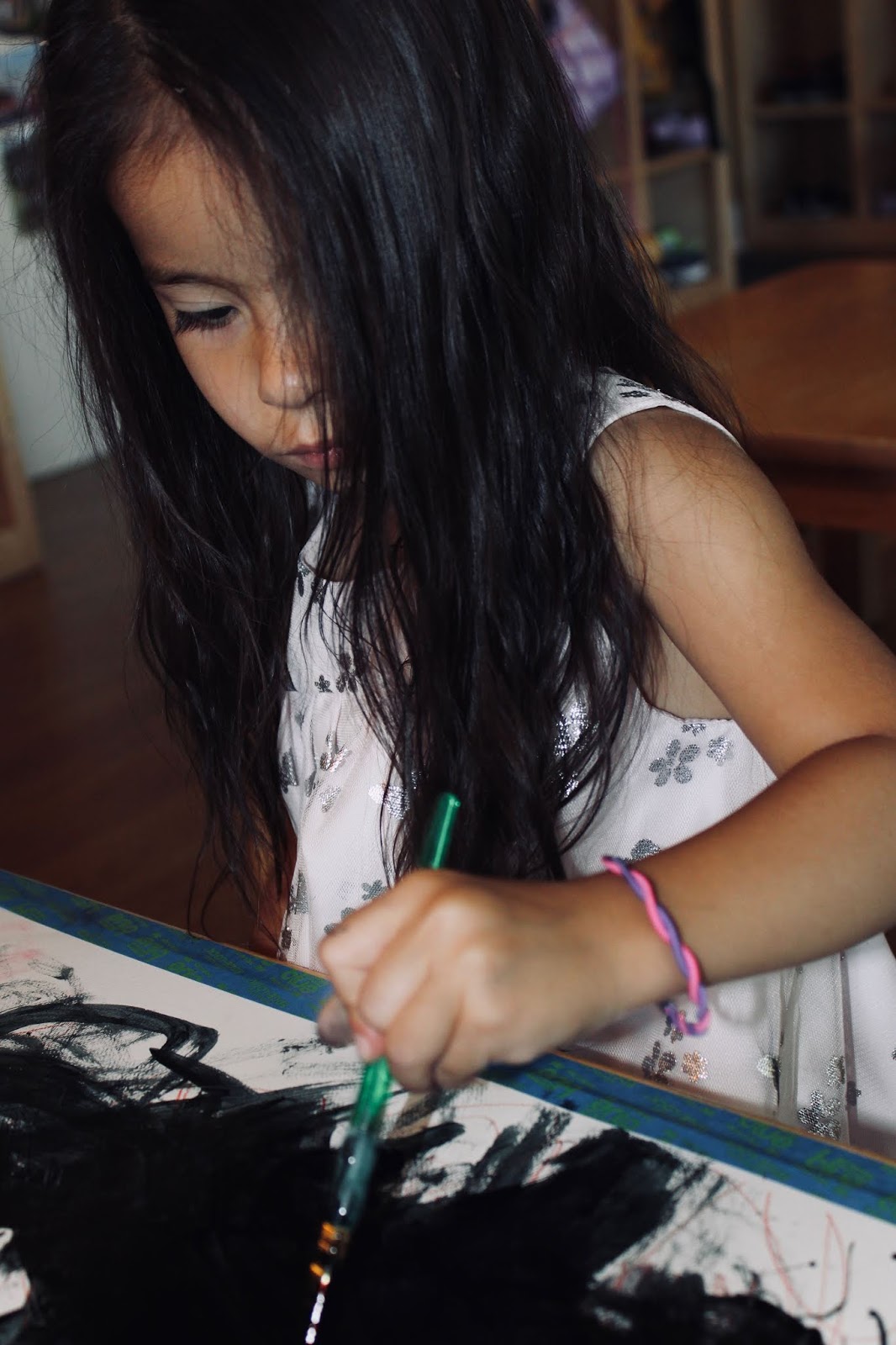
Amy is BACK!!!! She received a warm welcome from the children who eagerly dug into the mud with artistic fervor.

Amy will be joining us in the studio one week per month this year to work with all the children in the school!  YAY!  We are so lucky to have her!  If you aren't familiar with Amy's work click on this link to her website to find out a little bit about this wonderful artist and educator.
Monday, October 7, 2019

Collaborative Research: Redefining Public

The phone rings.  I answer.  My colleague Vida replies enthusiastically, "Angelina I have this question and I want to talk to you about it before I forget!"  
As educators working and learning alongside young children we regularly contemplate questions, interests and concerns any time, day or night.  I welcomed her call!
Vida continued, "Could a broader understanding of community compel us toward more sustainable practice and public policy?" 
Our conversation quickly became animated, fanned by our commitment toward sustainability in practice and education. We didn't have any tidy answers but we were committed to the questions so we decided to collaborate in a year of research to find out more. We discussed thoughts and ideas over several days before settling on a few questions to guide our inquiry.
  1. What responsibility do we have to the public (community we have not seen)? 
  2. What do we mean by "public"? (Keeping in mind that animals... including humans... make up a very small percentage of the biomass on our planet.)
  3. How might we create a shared understanding of public that includes our global biomass and all things that support life?
  4. How do these questions inform our classroom environments, lessons and explorations alongside children.
Formulating queries was the easy part.  Now, how to investigate them?  After some consideration we decided to simply keep doing what we do while paying close attention to how we do it.  We both agreed to track the children's responses and share our observations over the year.
And so it began:
The classrooms are investigating plants this year.  Today, Vida did a beautiful presentation during line time on the symbiotic relationship between plants and animals.  In simplest terms, she demonstrated that when we breathe, we inhale oxygen made by plants as a byproduct of photosynthesis and when we exhale those same plants can uptake the carbon in our carbon dioxide to make the sugars they need to grow. (Of course the process is a tad more complex).  Inhale, exhale. Symbiosis.  This simple lesson communicates interconnection.  Plants and animals need each other for MANY reasons and breathing is not the least among them.  Are they part of our community?
This lesson has support in a variety of classrooms materials, from various plant puzzles, books, classification cards to the various types of plants living and "breathing" in the room (so to speak).
The studio offers other opportunities to explore these concepts.  We can express these ideas in sculpture:
 photography:
 paint:
and more.  Keep checking the blog to follow our year of inquiry.  And feel free to let us know if you have any thoughts, ideas or suggestions.  You can post a comment here, send an email or schedule a time to chat.  Your input is most welcome. 

Friday, September 27, 2019

A for Apple


It's apple season and we are celebrating!
At the start of the week Bekke told a story about Hercules 11th labor and the golden apples.
Later in week I shared a Waldorf story about how the star got into the center of the apple.  The children delighted in the discovery.  (Did you know if you cut the apple in half across the middle you can see the star inside?)

On Thursday, we spent some time observing and drawing apples.
And cooking apple butter with BJ.  
The recipe is as follows:
  • 6 large apples peeled, cored and finely chopped (we used gala in one batch and granny smith in another)
  • 1/3 cup       raw sugar
  • ½ cup          light brown sugar
  • 1 tsp             ground cinnamon
  • 1/8       tsp        allspice
  • 1/8 tsp        nutmeg
  • splash          apple cider vinegar
Instructions
  • Place the apples in a slow cooker: Top with sugars and spices.  Mix well.
  • Cover and cook high 5 hours on low 10 hours stirring once halfway until the apples are tender and dark brown.
  • Uncover and puree with an immersion blender.
  • Cook on high, uncovered for 2 hours stirring occasionally until thickened.
  • Spoon into jars or containers, cover and refrigerate.

A wonderful time was had by all.  
Happy Fall and enjoy the harvest, the changing temperatures and the colorful leafy display ahead.
See you next week.

Friday, September 20, 2019

Figure in drawing...


Toddler's create, bake and discover in the studio


What will it become?

 "What kind of flower do you think these bulbs will become if we plant them in the ground?"
I asked the children on Tuesday afternoon and the children had fun considering the options... " a tree", "a tulip", "a daisy", "a rose".
They recorded their hypothesis with markers and paper.  These drawings will be revisited in the Spring once the bulbs are grown.  
Planting was wonderful! 
The children worked, quiet and deliberate, kneeling in the dirt, carefully laying two bulbs in a hole and coving them with soil.  When I asked the children to tell me what their bulb might need to grow.  Some answered "water, air and soil", clearly schooled in the science of gardening but others suggested that the bulbs would need happiness, love, mama's and families in order to grow, illustrating their experience that human growth involves more than food, water and shelter. 
Their names and thoughts were recorded on wooden sticks to accompany the bulb through the winter.
And we are looking forward to the spring when our bulbs will push forth in new life, proclaiming their color and petals for all the world to see.  We will share or predictions and results then.